LikuLiku Resort
It’s hard to give a summary of Fiji. I usually like to go into the details; what the grocery stores are like, what the food tastes like, what the streets smell like, but I can’t really do that here. With over 330 islands, Fiji is both massive and isolating, scattered and yet interconnected in ways that don’t translate neatly into a list of impressions.
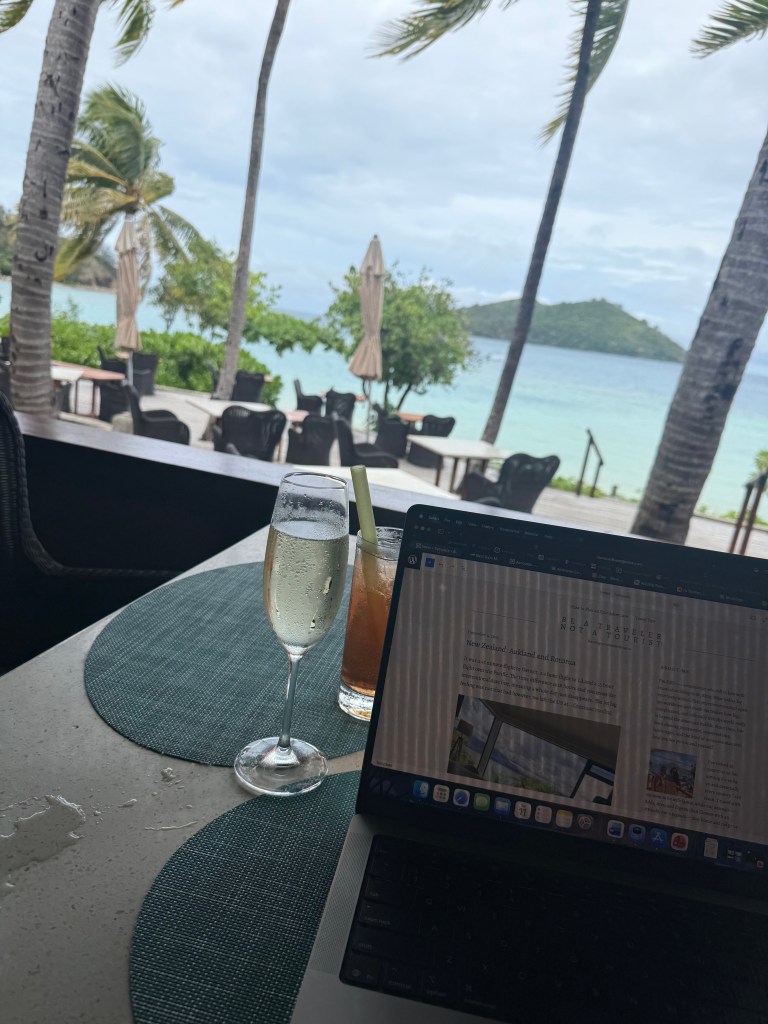
It took us three hours by plane from Auckland, New Zealand to reach Nadi. The airplane was small, and the airport looked even smaller. It was 9 PM and dark when we landed. The air was thick and the clouds were rolling in with intermittent rain threatening to break open. As we stepped outside to find a taxi (no Uber here, but they do have their own ride-share apps), I was shocked by my first impression. I genuinely felt like I’d landed in India.
I never do much research about culture, identity, or overall vibes before arriving somewhere. I don’t want my first impressions filtered through someone else’s expectations (please see my disclaimer here), so walking into Nadi’s arrivals terminal was a full sensory experience.
The space was packed with Indo-Fijians standing shoulder to shoulder. Families crowded around the exit, children perched on parents’ shoulders waiting for loved ones to come through the doors. People were fanning themselves with paper airline tickets, magazines, anything that would create the illusion of a fan. Woven into the chaos were drivers, dozens of them, trying to usher you toward their taxis. Some of these “taxis” looked like personal 1990s beaters with a plastic sign slapped on top, but everyone had the same hopeful energy. If you’ve traveled enough, you know the scene: wide-eyed, pale newcomers and a circle of locals ready to turn any attention into income.
Inside, the AC fought a losing battle against the heat while we got our bearings. I never take the first offer for a Taxi (I don’t love rewarding the most aggressive in the group), so we took a moment to stand back and assess. Eventually we found a soft-spoken gentleman and asked for a ride to Port Denarau, where we’d stay for the night. It was too late to catch the boat to our island, Malolo, since the ferries only run three to four times per day. So we used the extra night to do laundry, re-pack, and reorganize the chaos that becomes your luggage after a week of travel.
The next morning, we walked down to the port to catch our ride to paradise. The trip to our island took about two hours, mostly because the ferry stops at multiple islands, dropping people off and picking others up like clockwork. The passengers were a mix of locals, tourists and even packages that were mailed from the mainland. They have boat logistics down to an art form. It takes minutes for the large water tax to stop about 200 feet from shore, announce the island and get transferred fairly quickly to an onto a dinghy, almost literally tossing us aboard. Minutes later, we pull up to our ocean resort, Likuliku (Lee Ku Lee Ku).
The arrival felt almost cinematic. We were greeted with a local song, soft guitar, a handmade necklace, and a warm welcome that immediately erased the previous night’s airport chaos. From there, we were escorted to our overwater bungalow.
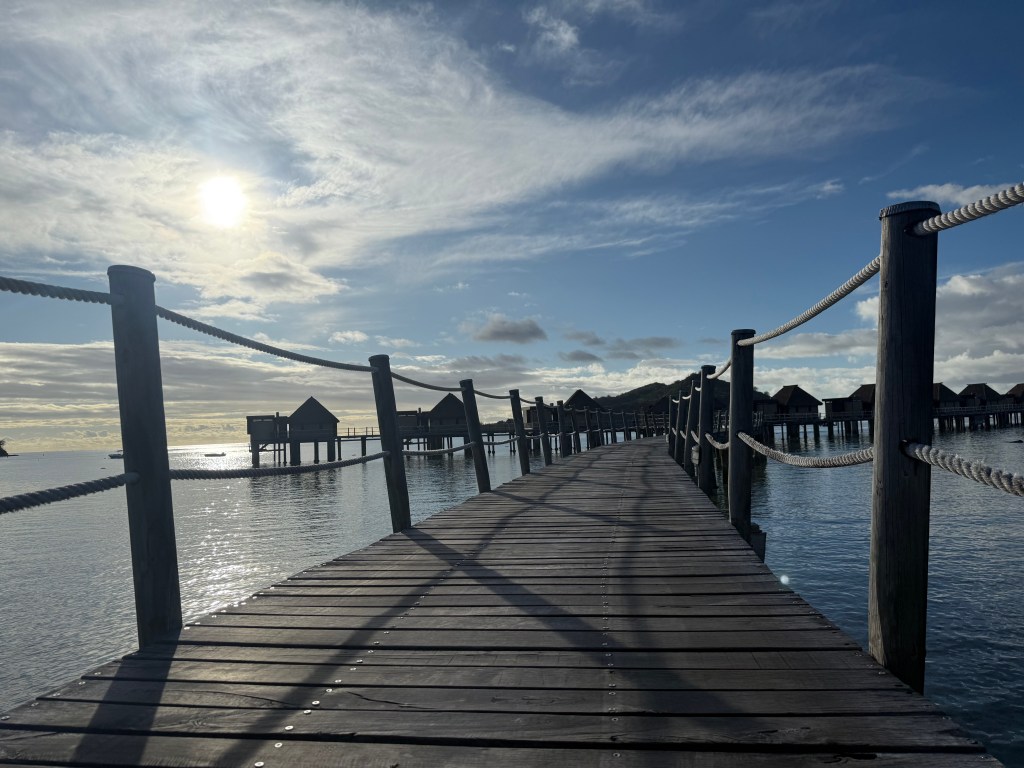
We travel a lot, but trust me when I say we have never stayed anywhere so breathtaking. Walking into an overwater bungalow is one of those rare experiences where your brain briefly forgets how to process beauty. Ours sat on stilts above a lagoon so beautiful it looked edited, the kind of image you assume only exists on screensavers.
The room itself was warm and minimal, with high wood-beam ceilings and a wall of windows that opened directly to the ocean. No curtains, no distractions, just an uninterrupted horizon. The floor had a glass panel cut into it, so you could watch fish drift beneath you while watching TV or reading; the bathroom had a window in the counter space, so you could watch the fish while brushing your teeth. Outside, a private deck wrapped around the bungalow with steps that led straight into the water. You could wake up, walk ten feet, and be snorkeling before your coffee even cooled.
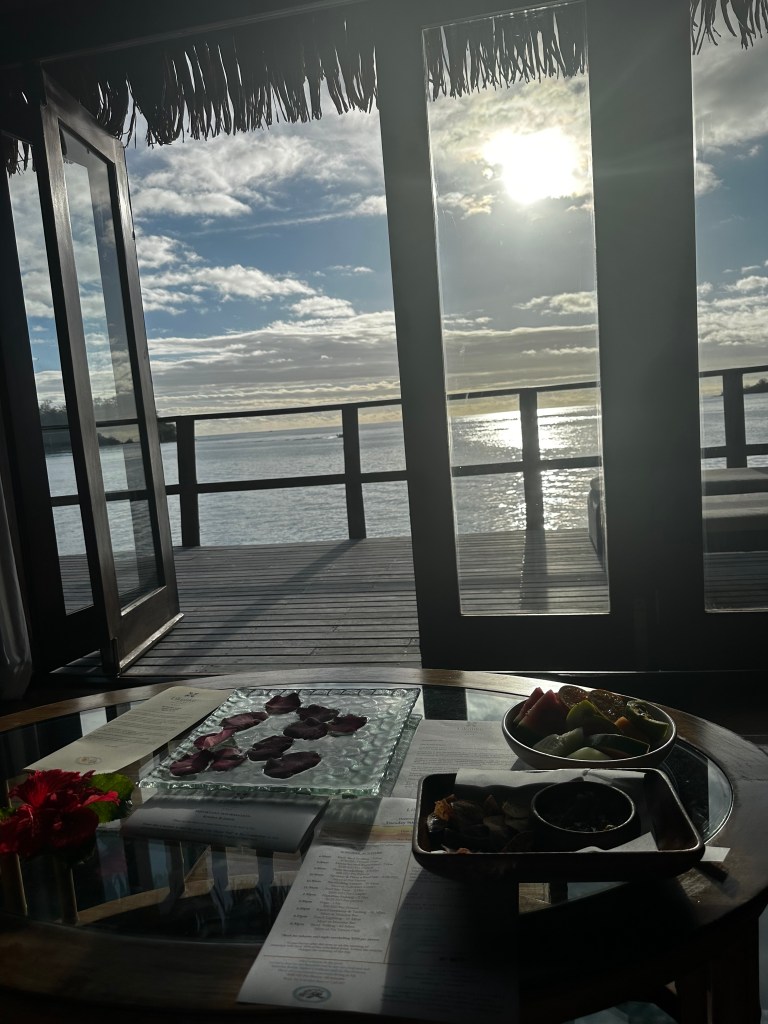
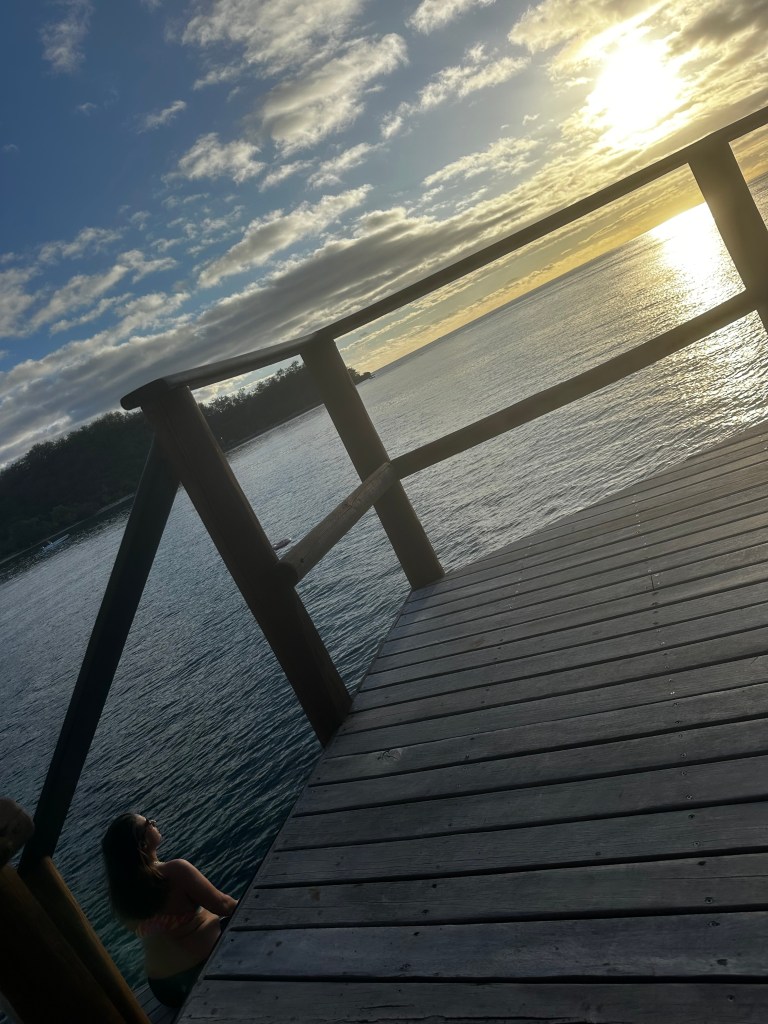
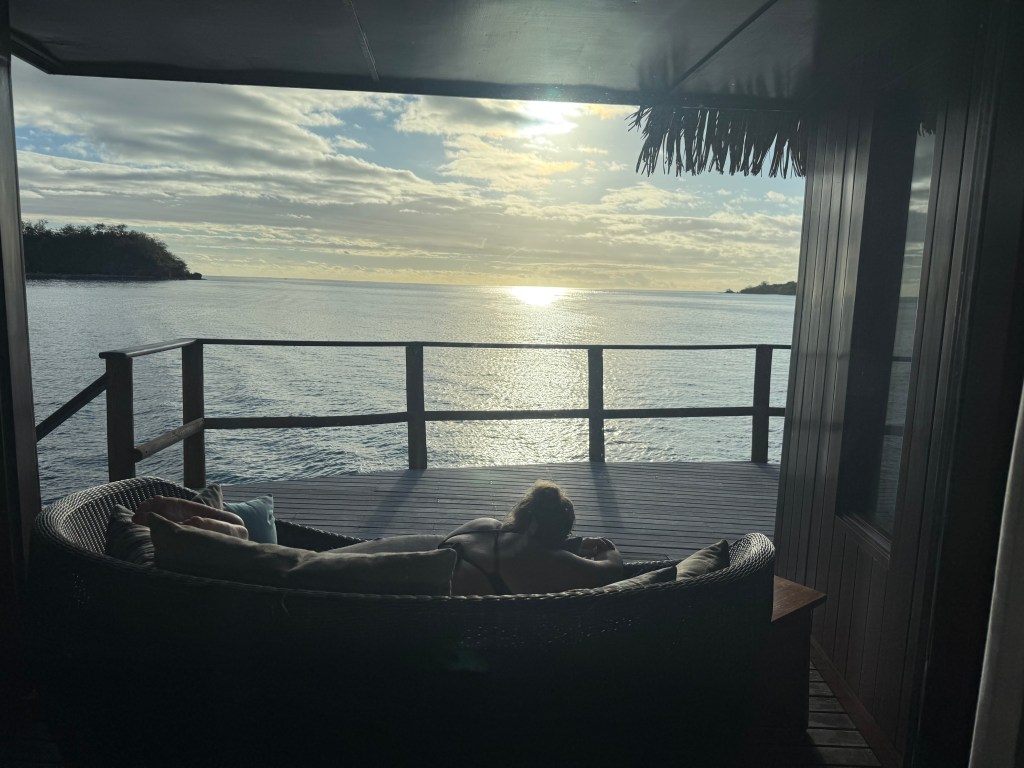
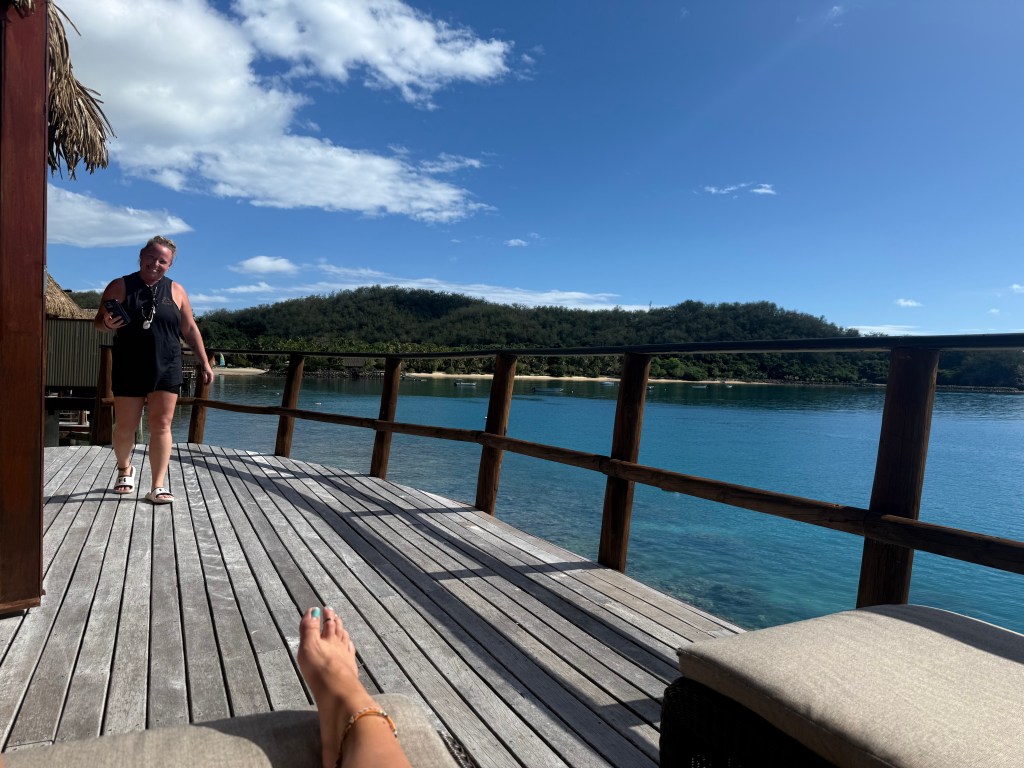
It wasn’t extravagant in the way some resorts try too hard to be. It was elegant because it didn’t need to prove anything. The ocean was the star of the show, and the architecture simply made space for you to witness it. It hits you, in a place like that, how small you are — and how lucky. Life is simple here: the weather predictable, the wildlife thriving, the people are friendly, it makes all of your familiar stress literally seem like it’s across the world.
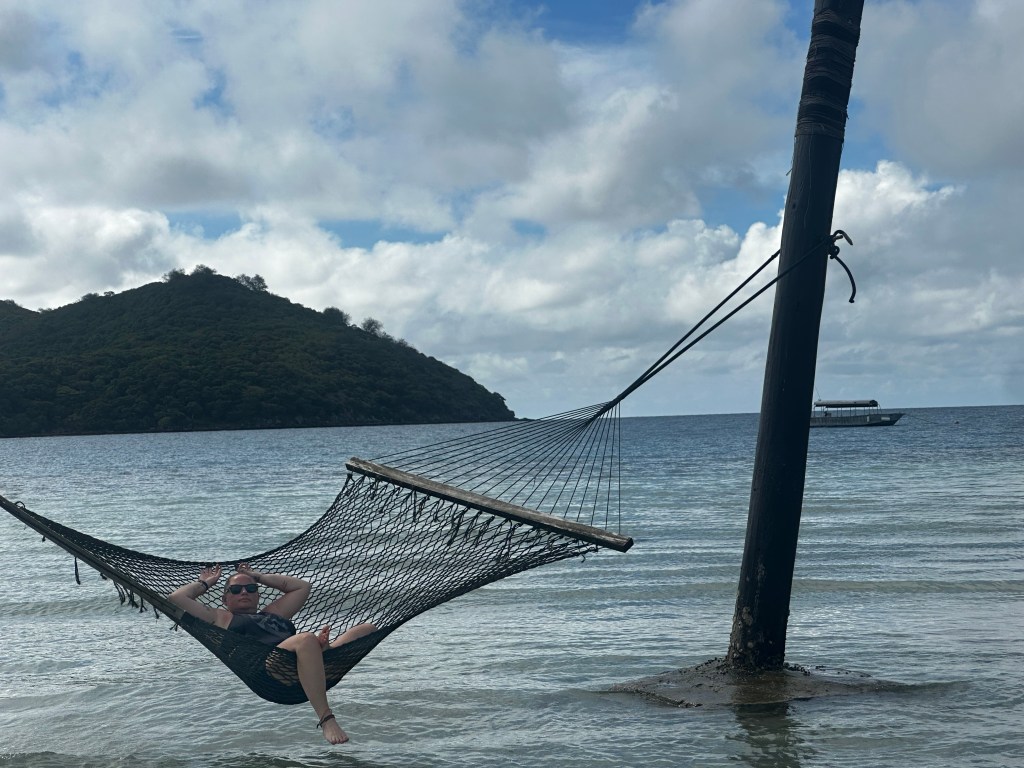
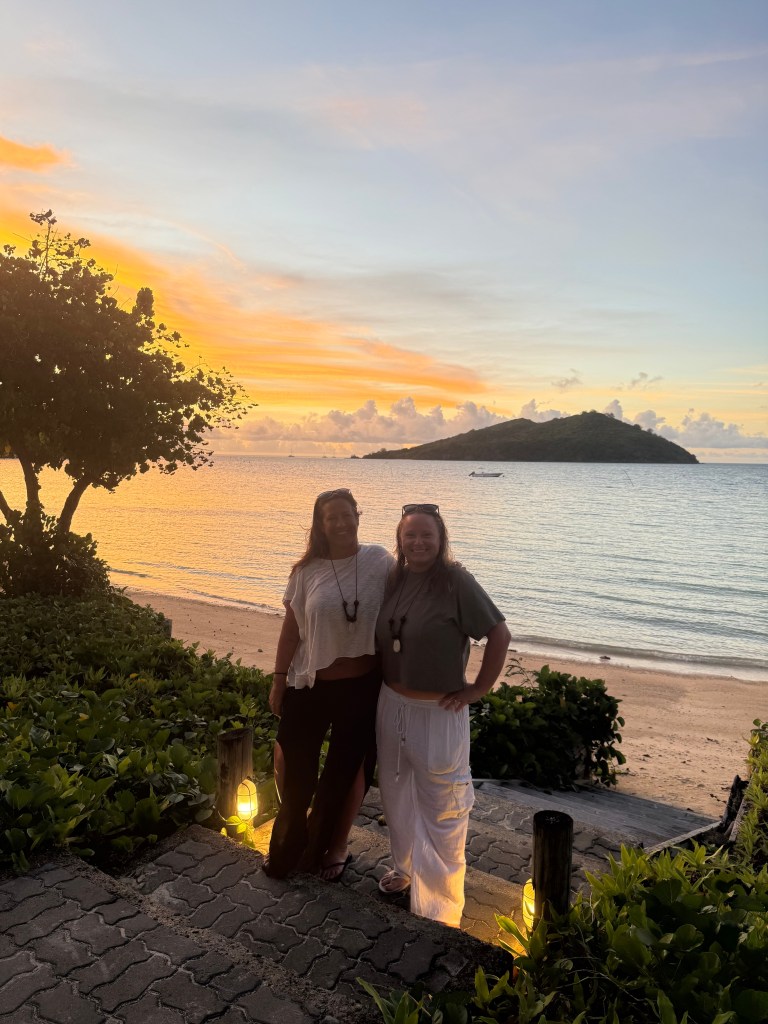
This is why I cannot describe Fiji to you. We were on a remote, beautifully crafted resort with unlimited food. You could leave, but you had to specifically schedule a water taxi, and they aren’t cheap. Do I feel like I really explored this culture or this land? No. I absolutely felt like a traveler taking advantage of everything they had to offer; sometimes that’s ok I guess.
We did take a day to visit the Yaro Village. This is a group of people that are native to the small island of Malolo. To understand the importance of this, you first have to understand Fijian population. Fiji’s population is broken down almost almost in half: Indo-Fijians make up about 40-50% of the population. They were brought over from India by British Colonials to work the sugar cane population (gives pretty strong pseudo-slavery vibes, which no country in the world seems immune too). The other 50% or so is native Fajians (iTaukei), which is a mix of Malasian / Polynesian (Google research coming through strong here). These tribes can still be found not only inhabiting but staking strong claims in ownership of the various Islands. I believe it is mildly contentious between races here that Indo-Fijians cannot own land. Due to this, there was a large emigration in the early 2000’s.
LikuLiku Resort is on Malolo island which is owned by the native people indigenous to it. LikuLiku has a 99 year lease with these natives. Not only do they pay them rent, but the resort also built them a fresh water system, provided solar panels for electricity and gives them first rights to any available job at the resort. It is acceptable for Travelers to visit these villages as they grant express permission.
Jamie and I were the only ones interested in this exploration form our hotel. The boat ride to the other side of the island was about 10 minutes. Our guide was a local to the village, lets call him Samu. He walked us through the common areas, the church, the school, all the while telling us stories and local customs.
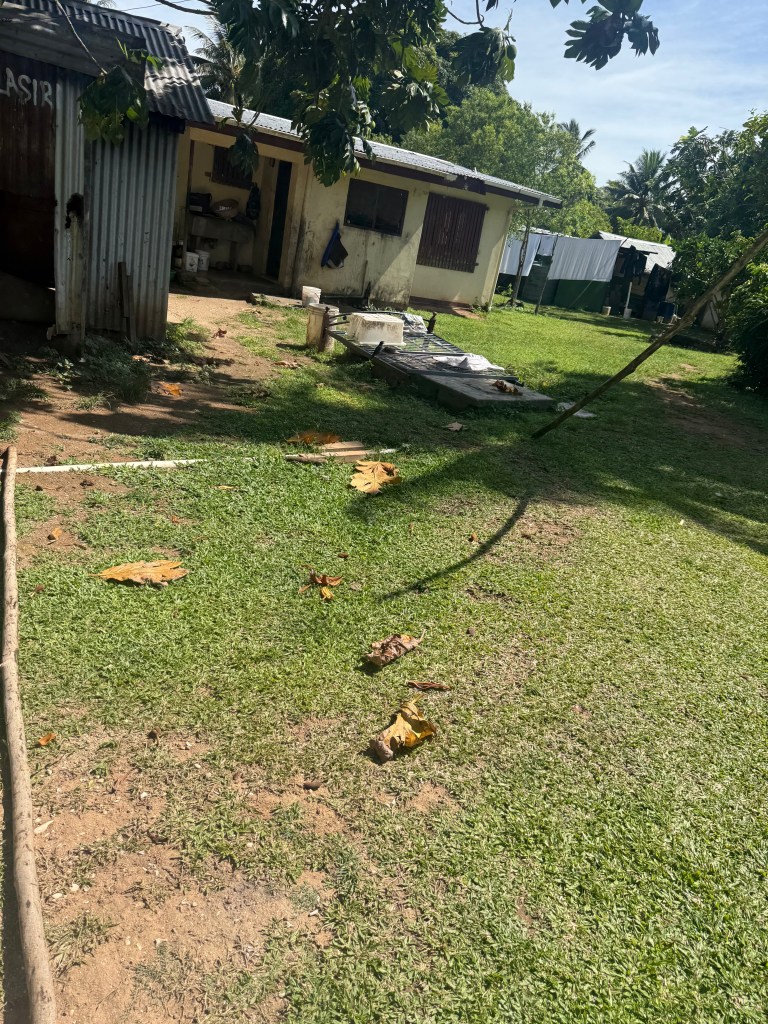
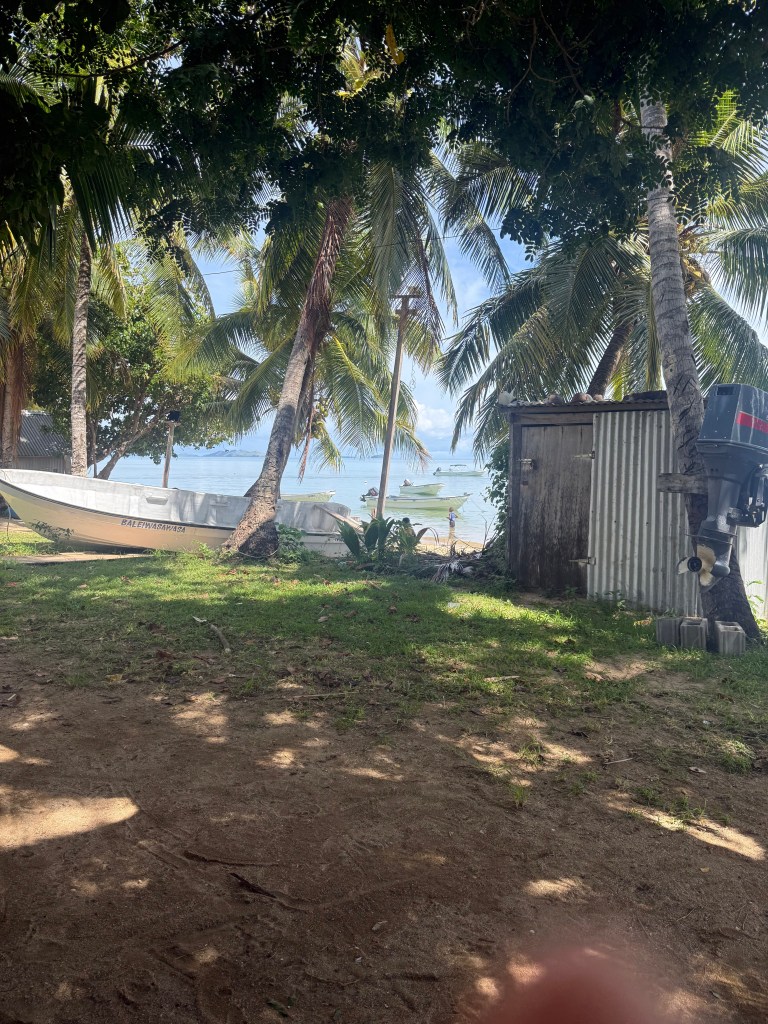
I learned the main religion is Christianity, primarily Methodist, due to a large effort of Missionaries from the 1800’s. Thomas Baker is perhaps the most well known of these Missionaries. Baker was killed by Cannibalistic tribes in Fiji and the legend states that after this brutal murder, poverty and drought lasted for 4 generations. In order to break this self induced curse, the distant relatives of Baker were invited back to Fiji and issued a formal apology. This happened in 2003.
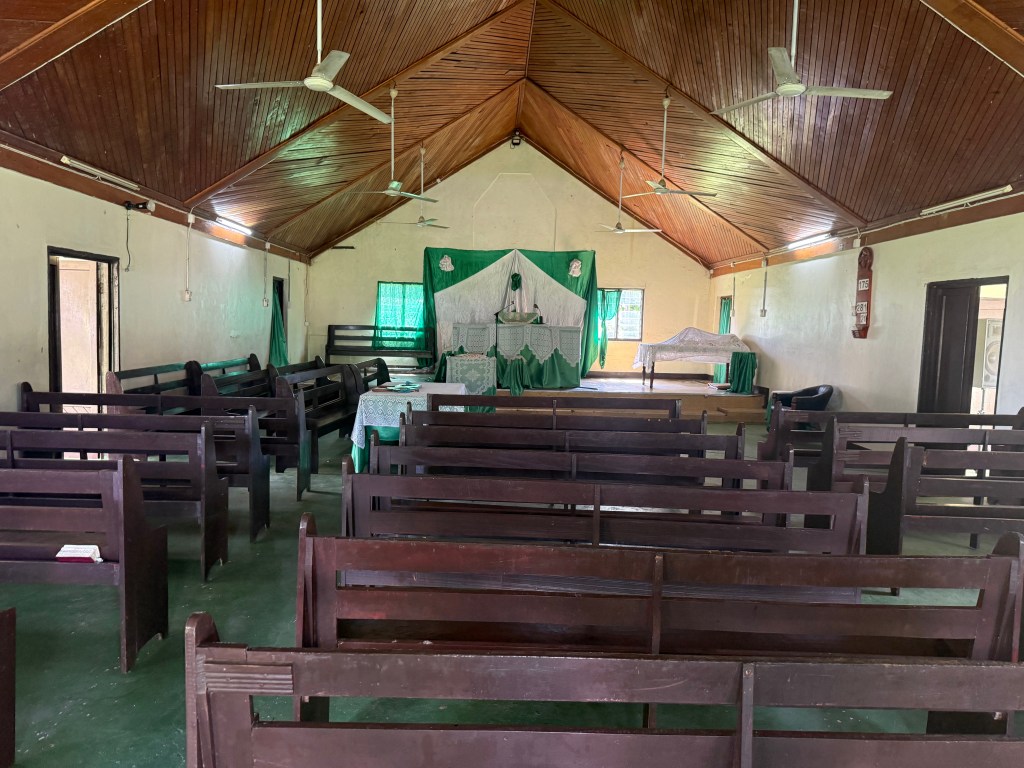
After living in the Caribbean for so long, I am always disgusted when I see Tourists taking pictures of 3rd world / poverty ridden living conditions as if they are fun scenes or simply around for entertainment purposes. Our guide specifically gave us permission to take photos of this village, but despite that I only have a few. When the photos come with the correct intent and education or promote some sort of positive message that the village or people would be proud of, then it can be an appropriate tool. I hope this platform gives the intent of its message: Fiji is beautiful and owned by indigenous people and should be accepted as such.
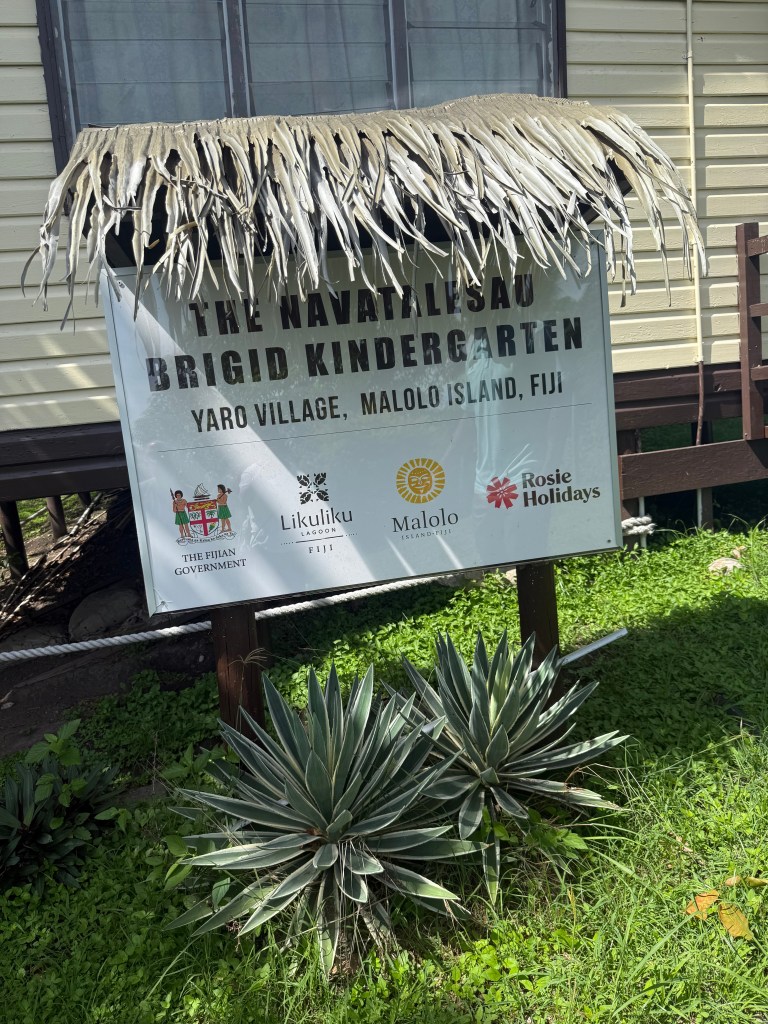
The Yaro Village has seen and accepts the advancements that being near a resort can offer. By opening up their homes, they have met many a traveler. Samu told us a story of an Australian woman on holiday that inquired about a local kindergarten. After seeing the building, the Australian family pledged a donation for upgrades that even included the local children getting iPads. This paired with the money from the resort gives the children access to education from an early age. This is one of the best examples of locally owned tourism very directly benefiting the local community.
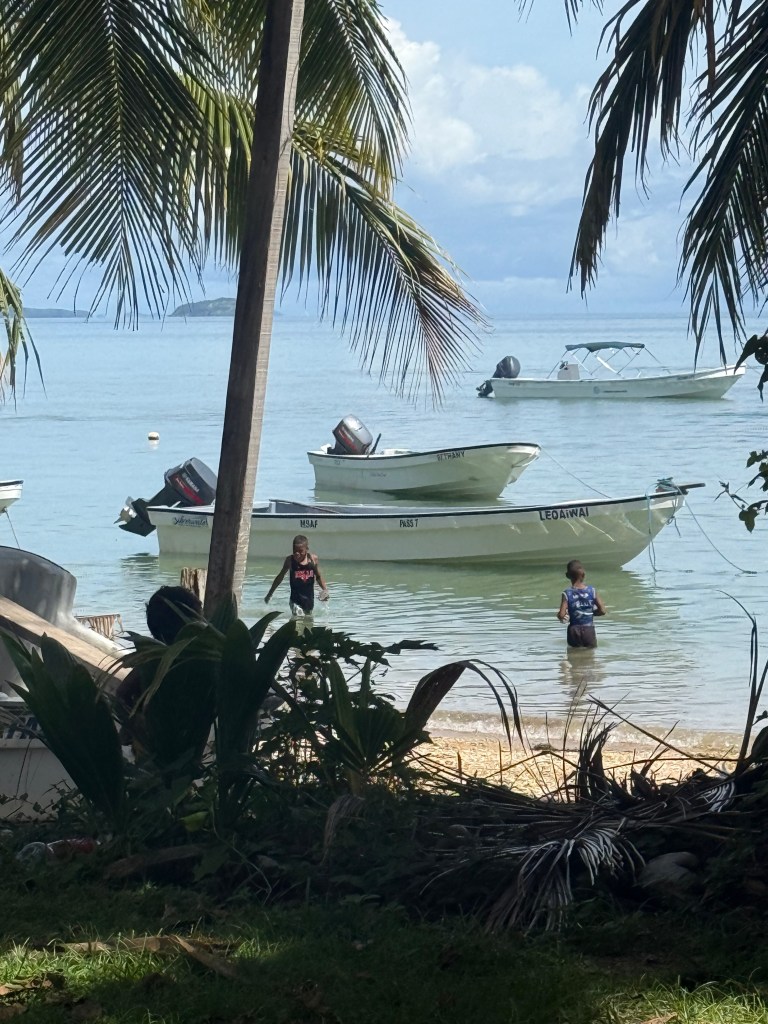
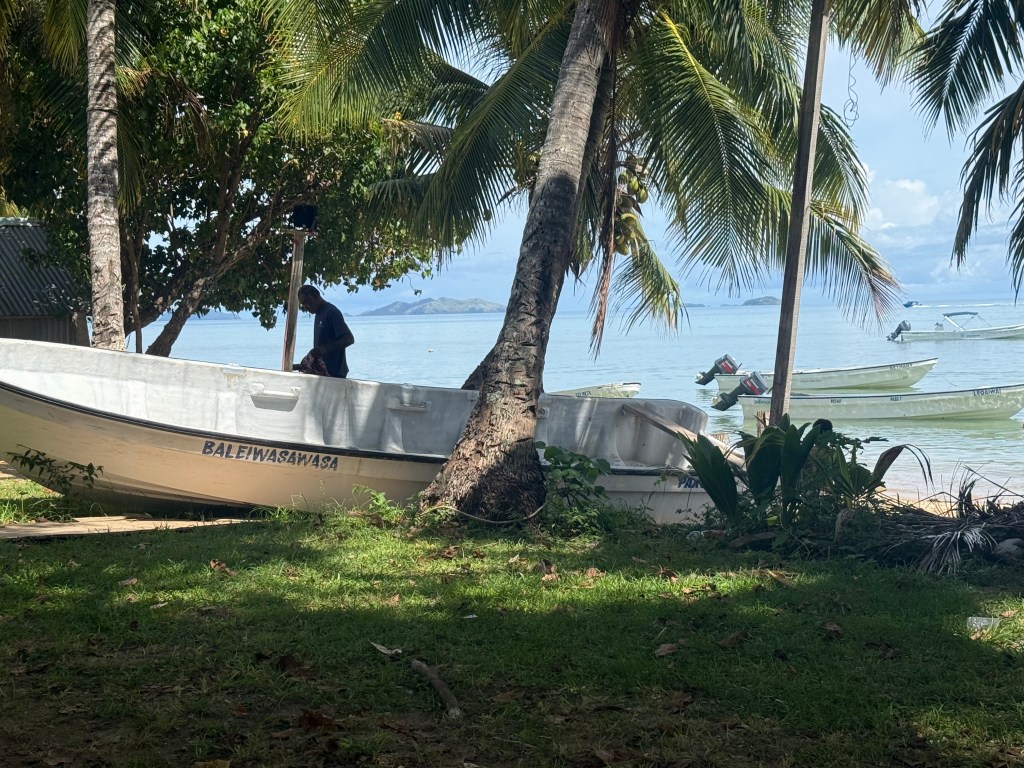
It would be against my character to not also point out the generous research done for local animal species on the island. We personally donated to the Fiji Crested Iguana Catch and Release Program. A common theme among extinct and endangered species is simply human involvement. We learned in New Zealand that the famous Kiwi is so rare and endangered due to settlers introducing Ferrets. The Kiwi has no naturally evolved defense for these predators. Similarly in Fiji, these special iguanas are threatened by the introduction of: domestic cats. This conservation project aims to keep this population of Iguanas thriving despite human nativity and egocentrism.
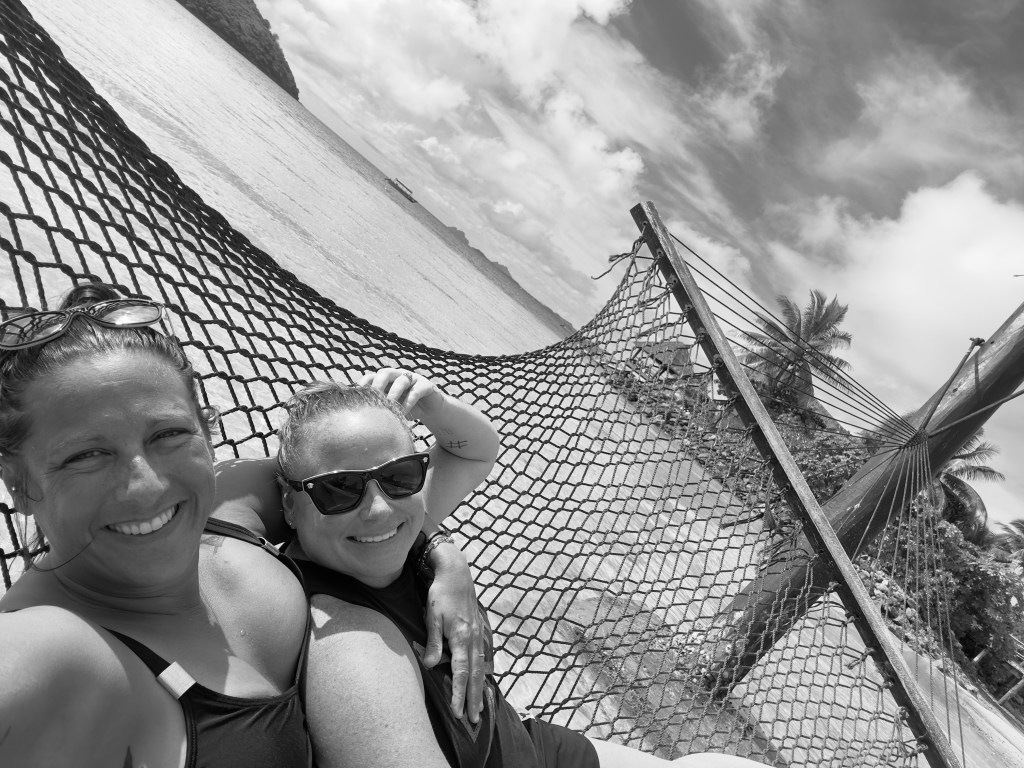
Fiji made an impression. The culture is unique; the islands are beautiful. The water taxis are organized and efficient. LikuLiku is a paradise that not only celebrates relaxation but it contributes to furthering Fijian locals and protecting its native wildlife.
We’re not built for extended inactivity, so after four beach days of doing nothing, we packed up and headed for our next adventure: Sydney, Australia.

 Be a Traveler Not a Tourist
Leave a comment