It was a 45 minute flight to Detroit, a 4 hour flight to LA and a 13 hour flight over the Pacific. The time difference is 18 hours and you cross the international date line, meaning a whole day just disappears. The jet lag feeling was not that bad however, we left the US at 10:30 PM on a Sunday arrived at 9:00 AM on a Tuesday.
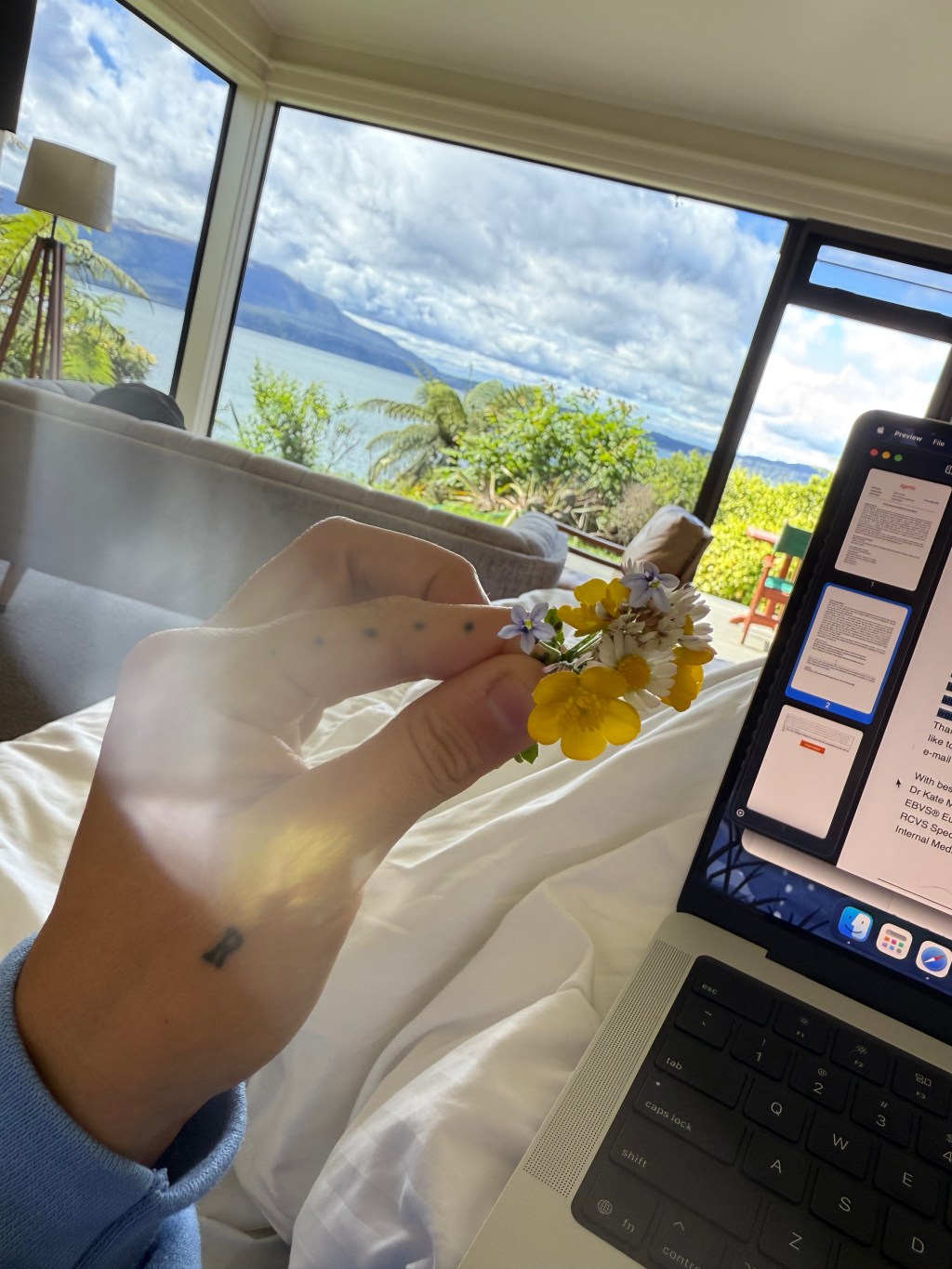
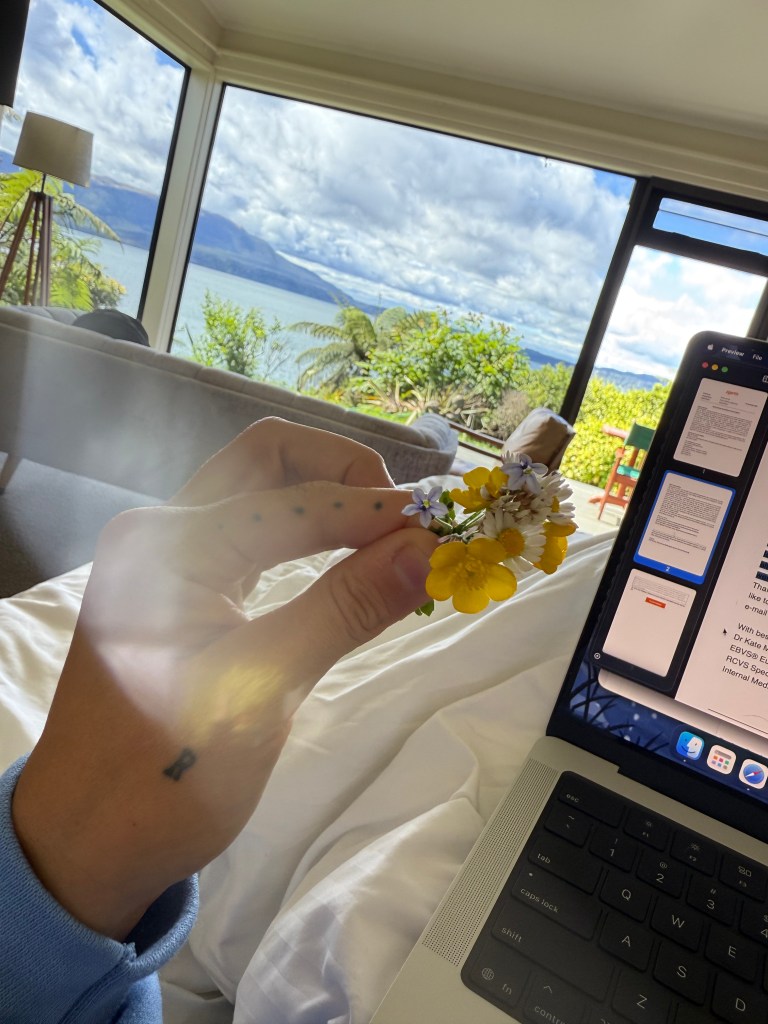
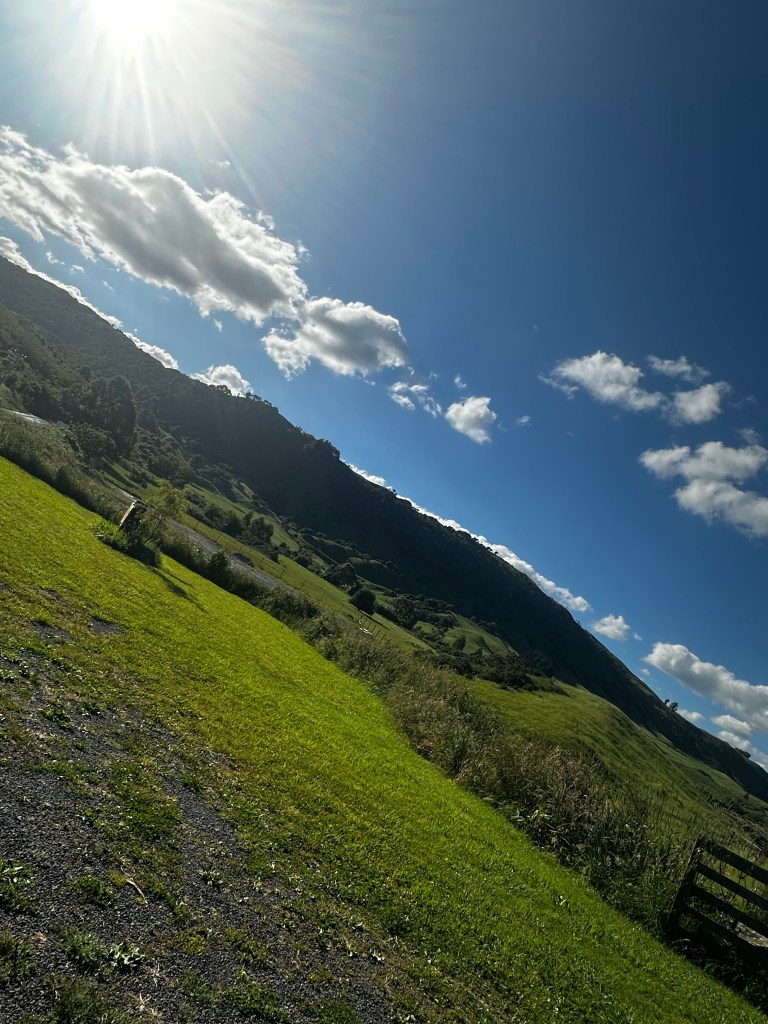
We started in Auckland, which is like any other metropolitan city. The airport was nice, the car rental adequate, but the drive south – simply mind blowing. The landscape is so green we actually paused to Google rainfall statistics. The rolling hills, the mountains in the distance, the endless herds of cattle, sheep, and goats — it all makes you question why we ever thought industrial farming was necessary. Imagine the vast green hills of Ireland meeting the tall volcanic mountains of the Caribbean – the landscape is truly indescribable. It’s left sided drive, so if you aren’t comfortable with that it will take a little practice. Just remember, no matter what country you are in, the driver is always in the middle of the road! (#ProTip#1).
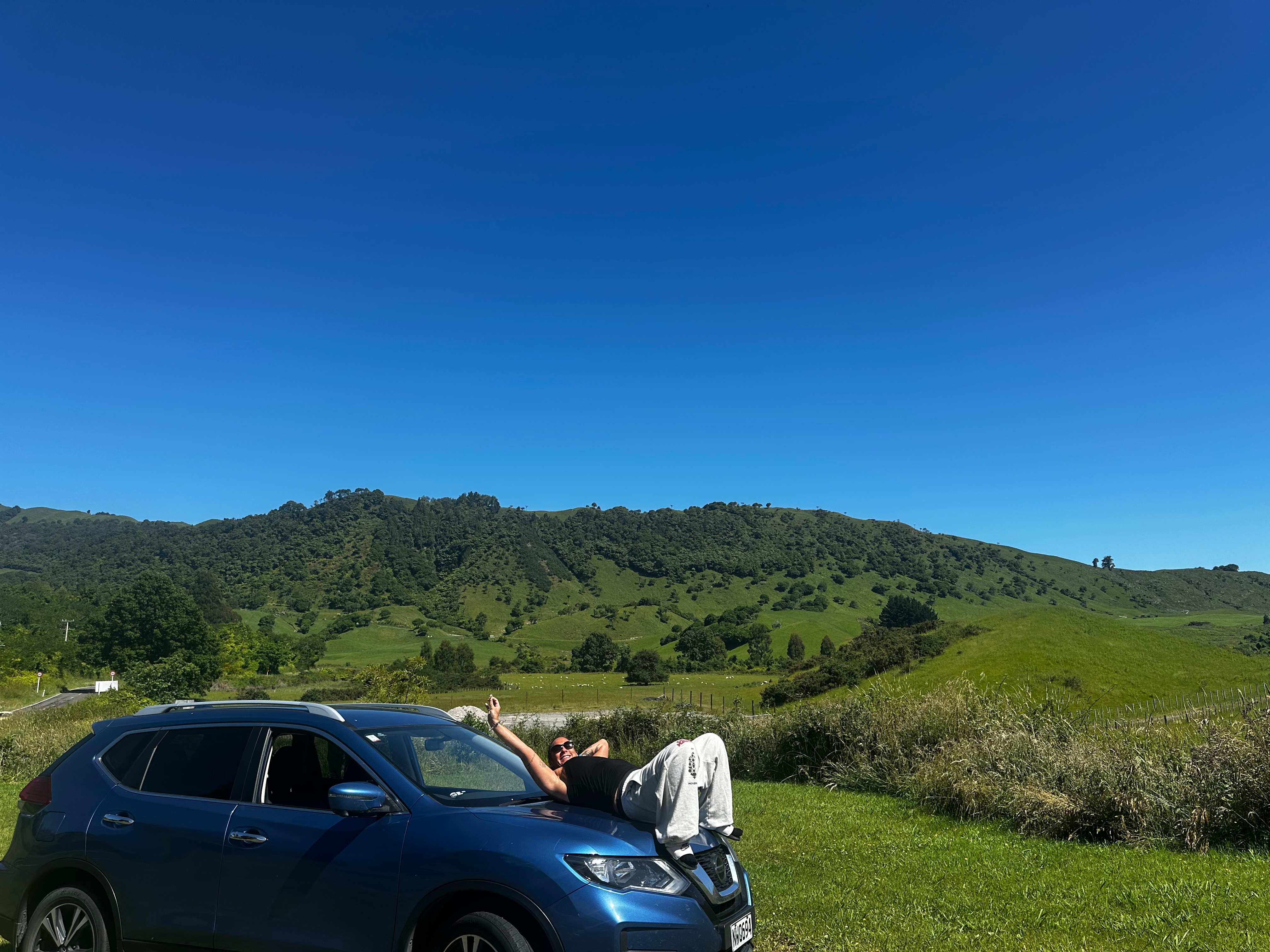
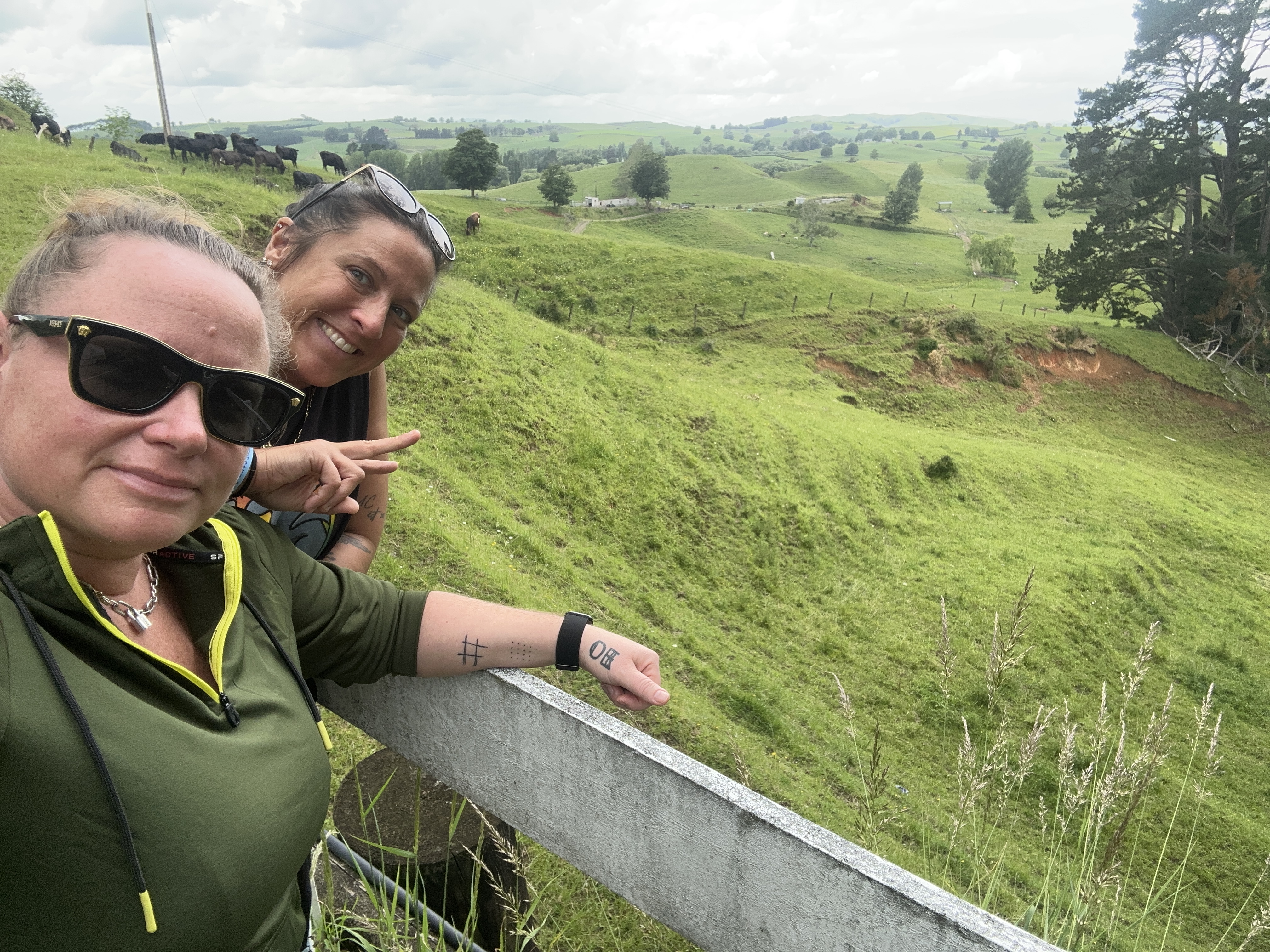
I don’t think I will ever look at cows the same way again. These are not cows — these are spiritually fulfilled bovine philosophers living their best lives. If reincarnation is real, manifest me as a New Zealand cow. The countryside is nothing but rolling green hills and happy, well-fed farm animals as far as the eye can see.
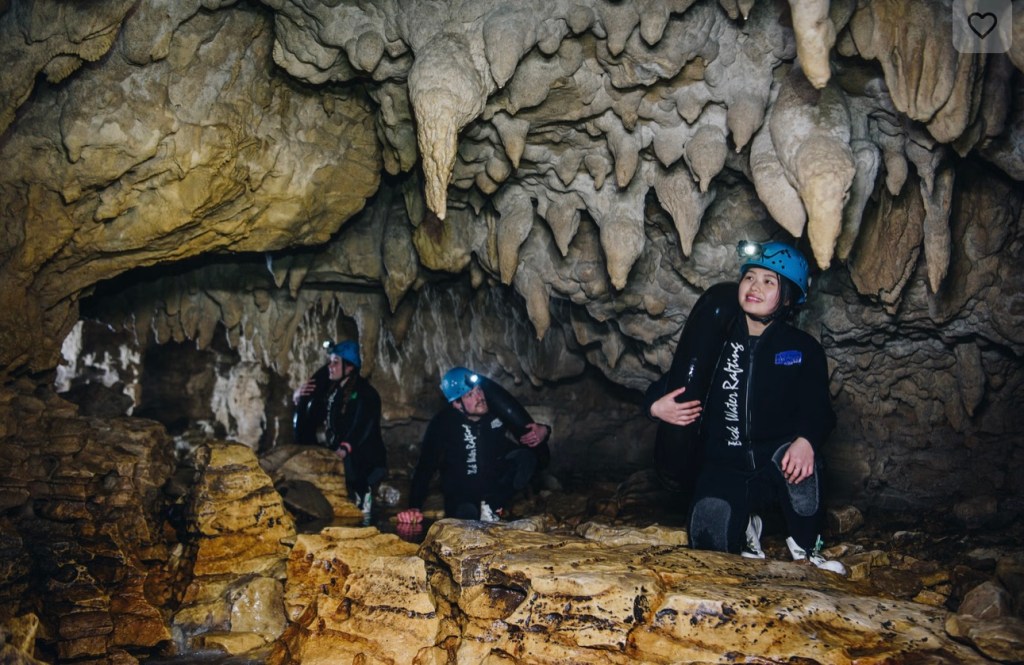
After a two-hour drive, we arrived at Waitomo Caves. Caves themselves aren’t unique, the U.S. has plenty (I highly recommend Mammoth Cave, which I’ll write about another time). But this cave has glowworms, which is really just a cuter name for maggots that glow in the dark. Think of that 90s toy with the hard plastic face and the glowing bum… except these are actual larvae catching prey like tiny sky-spiders. There’s a lot of scientific explanation behind their bioluminescence – that’s what google is for.
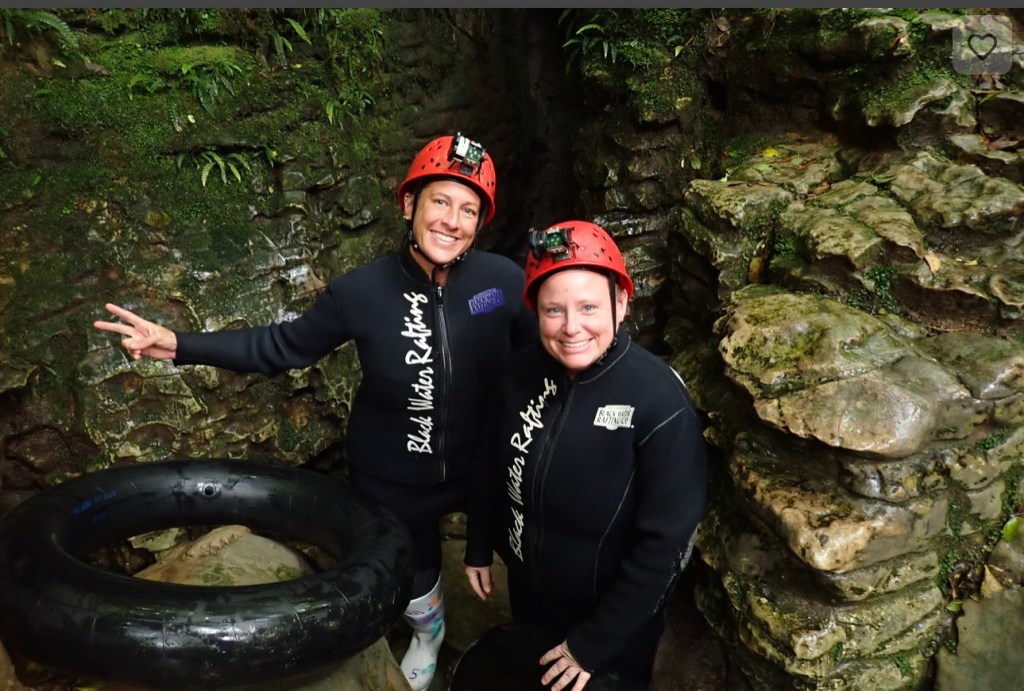
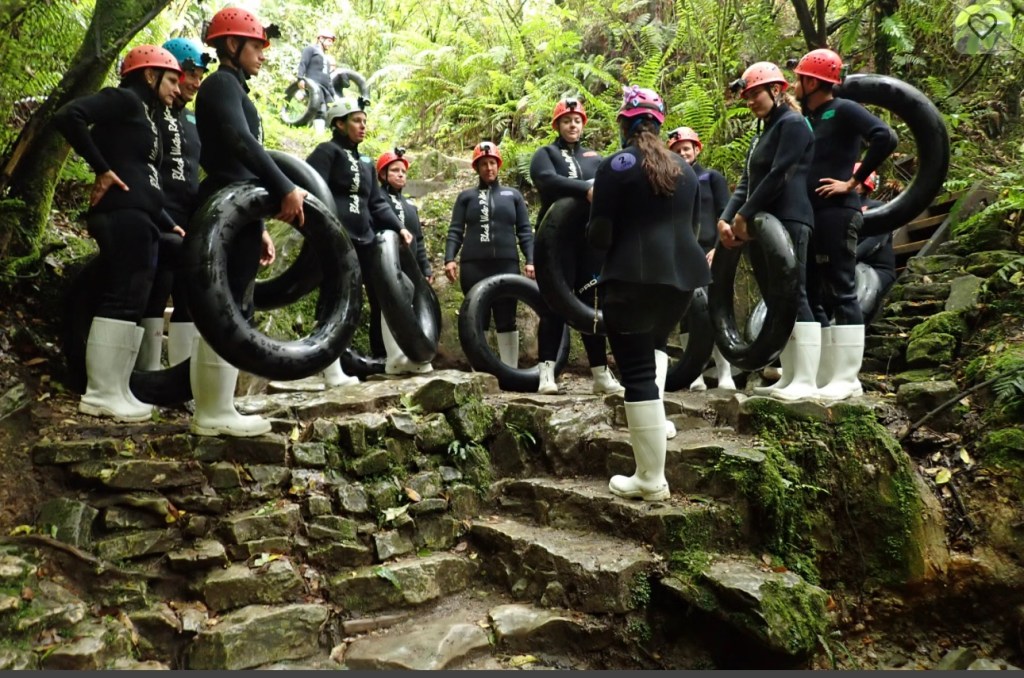
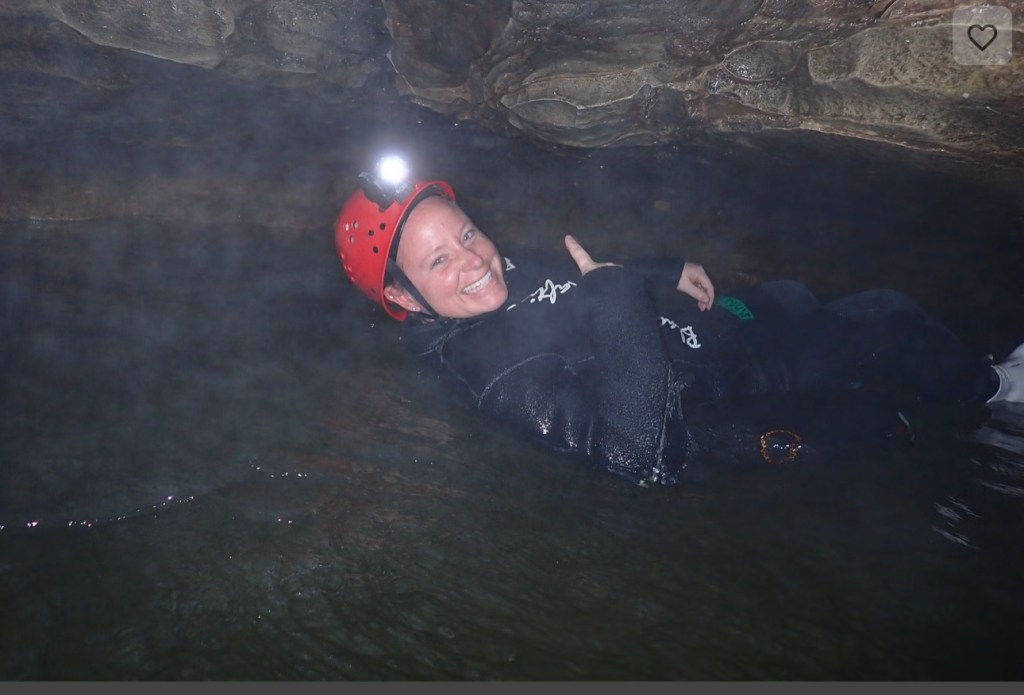
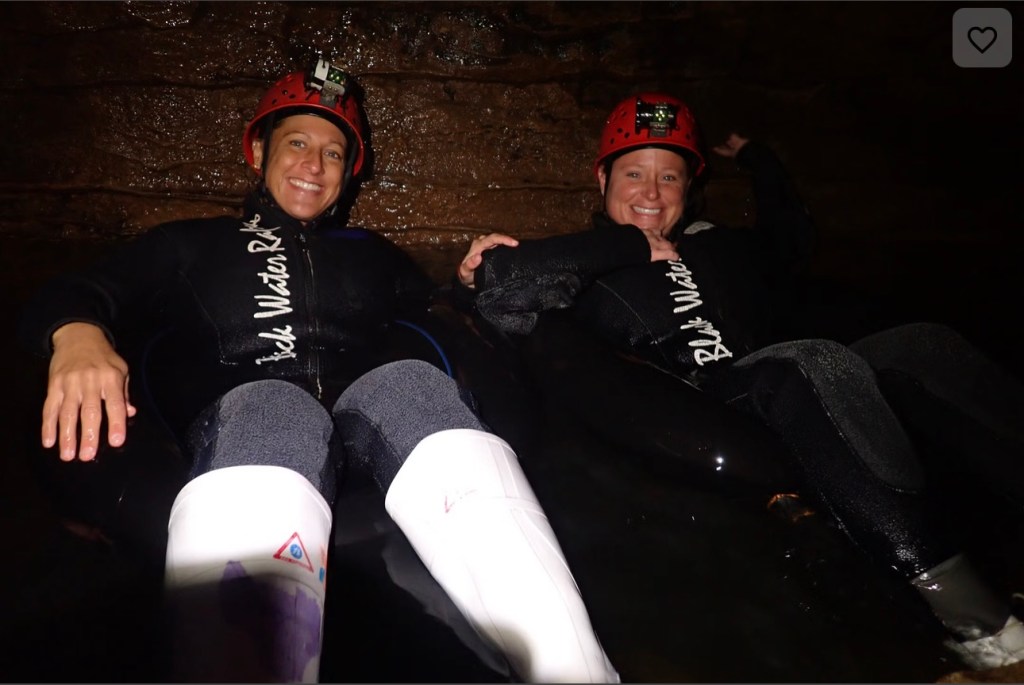
The company provides cold, stiff wetsuits, a preview of how frigid the water will be. A short descent through a rocky opening drops you into the mouth of the cave, and from there the journey becomes a mix of walking, swimming, climbing, and, yes, jumping off waterfalls. Some portions are so narrow you have to lie flat on your back and slide through. The mention of underwater eels definitely spikes your adrenaline, though we didn’t encounter any.
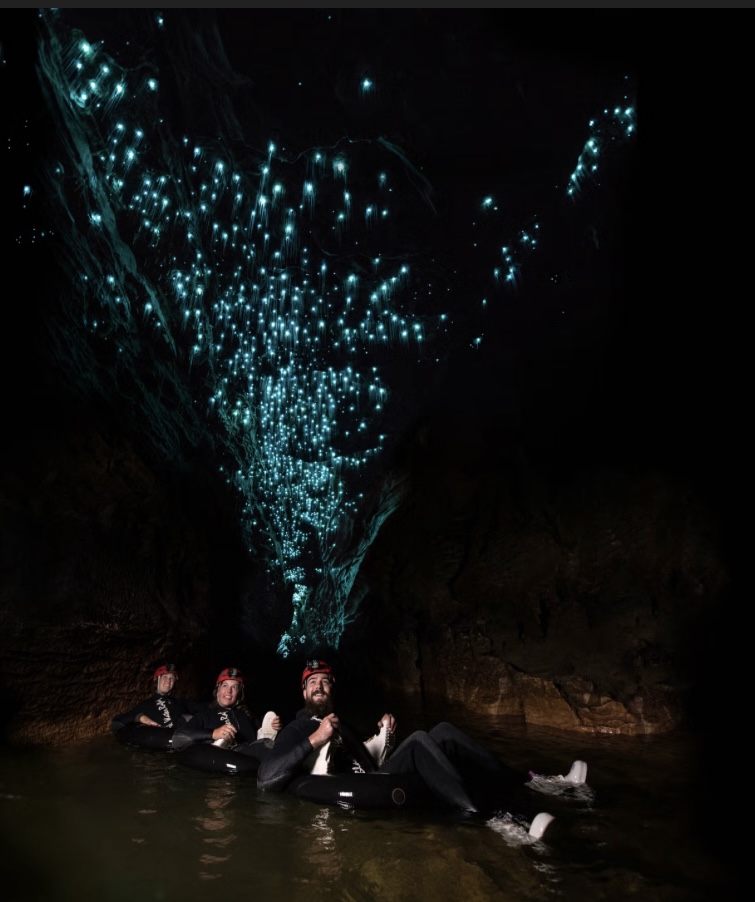
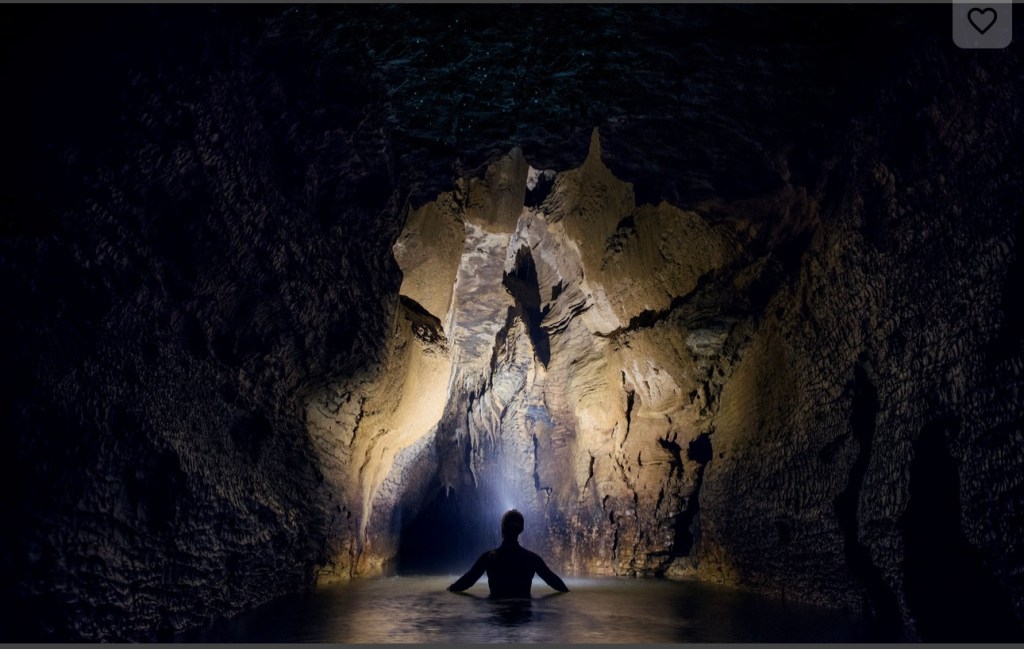
The darkness is startling. When you turn off your helmet light, the still, stale air surrounds you, and above your head entire constellations appear — thousands of tiny blue-green lights glowing on the ceiling like a night sky that somehow ended up underground. It’s surreal, beautiful, and unlike anything I’ve ever seen.
Would I recommend it?
Absolutely — unless you’re claustrophobic or not a strong swimmer. In that case… maybe stay outside and journal about your feelings instead. We used The Black Water Rafting Company, and they were fantastic.
Rotorua was our final destination. Fun fact: Rotorua is the smelliest place on Earth. At first, I honestly didn’t think it was that bad. But the more we explored, the more that confidence unraveled. By day three, I understood why people warn you. The smell somewhat ruins the ancient magic of the land.
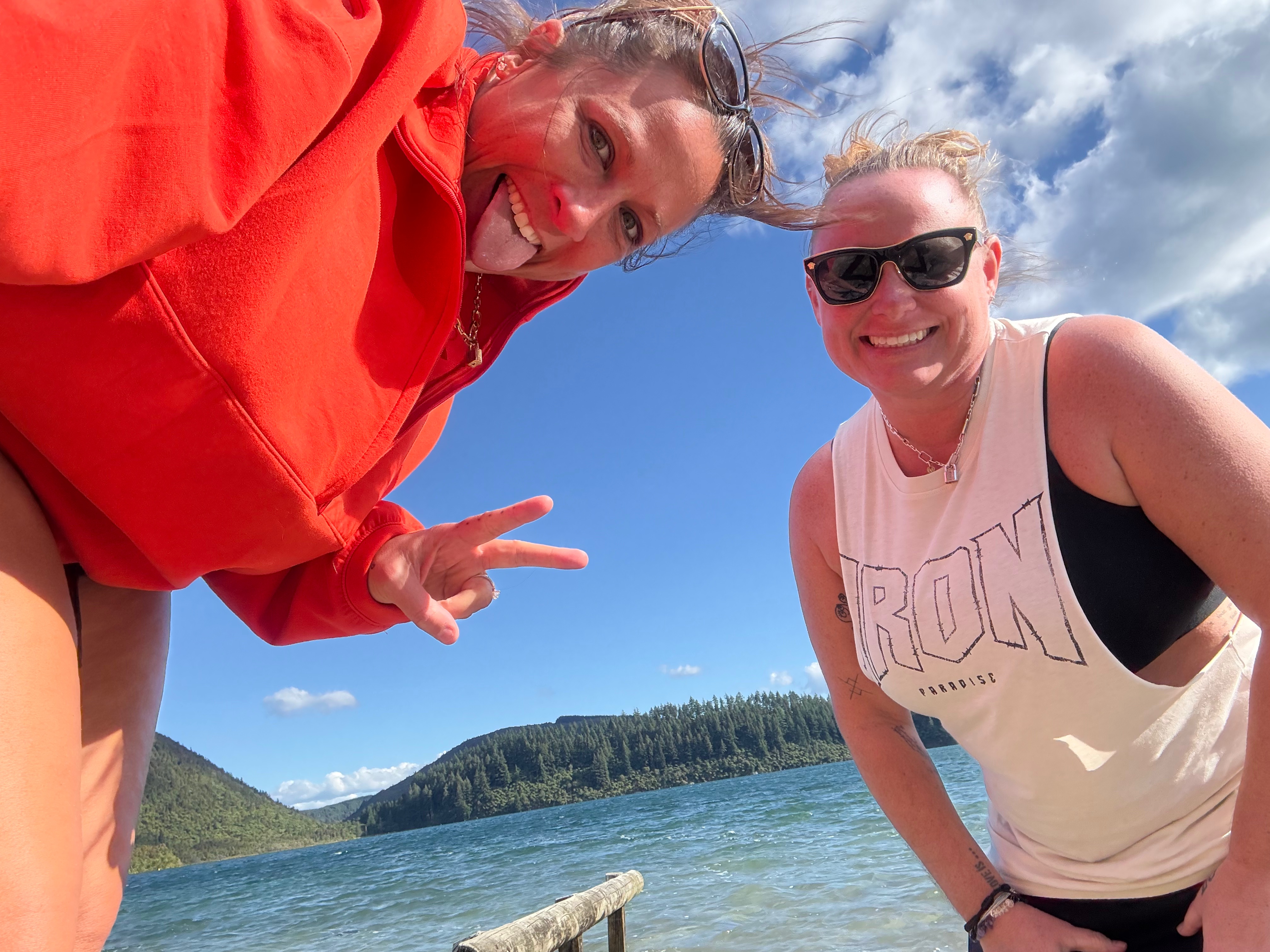
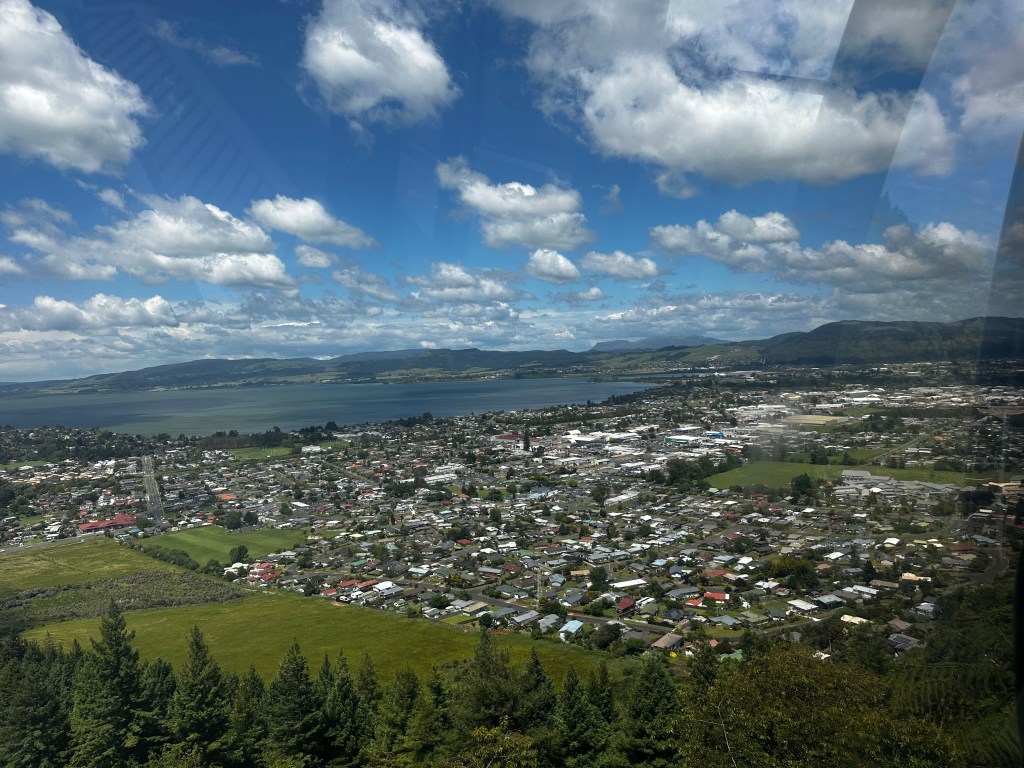
The history of Rotorua (Roto–Rua) is fascinating (prepare for some incoming Wikipedia word vomit): the entire city is built around the remnants of a massive volcanic eruption. Thousands of years ago, a volcanic explosion carved out the enormous caldera (a wide, bowl-shaped basin formed when the ground collapses after an eruption) that now holds Lake Rotorua. The lake is serene and beautiful, but once you start wandering the surrounding geothermal areas, you can absolutely feel how volatile and powerful the earth still is beneath the surface.
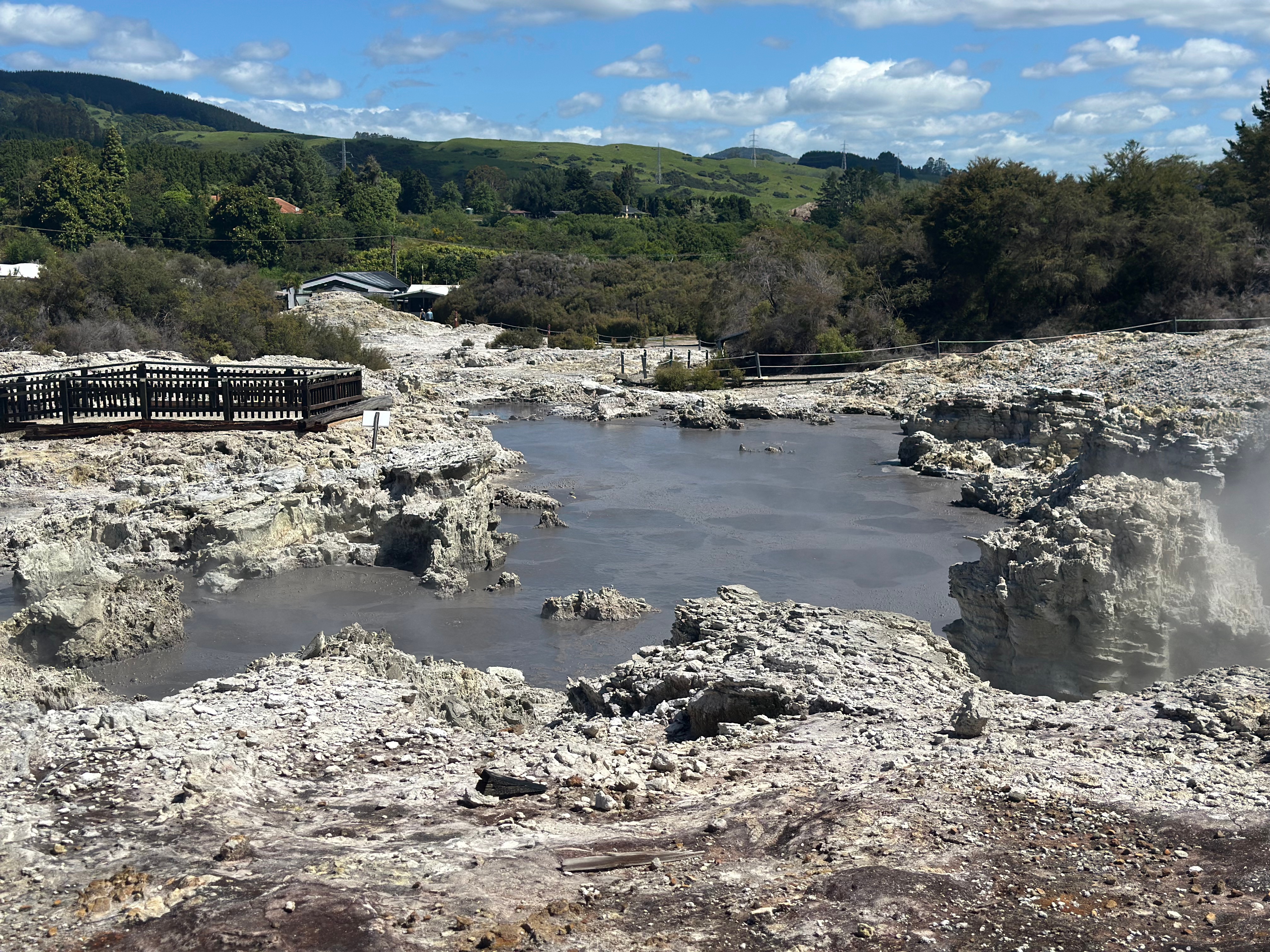
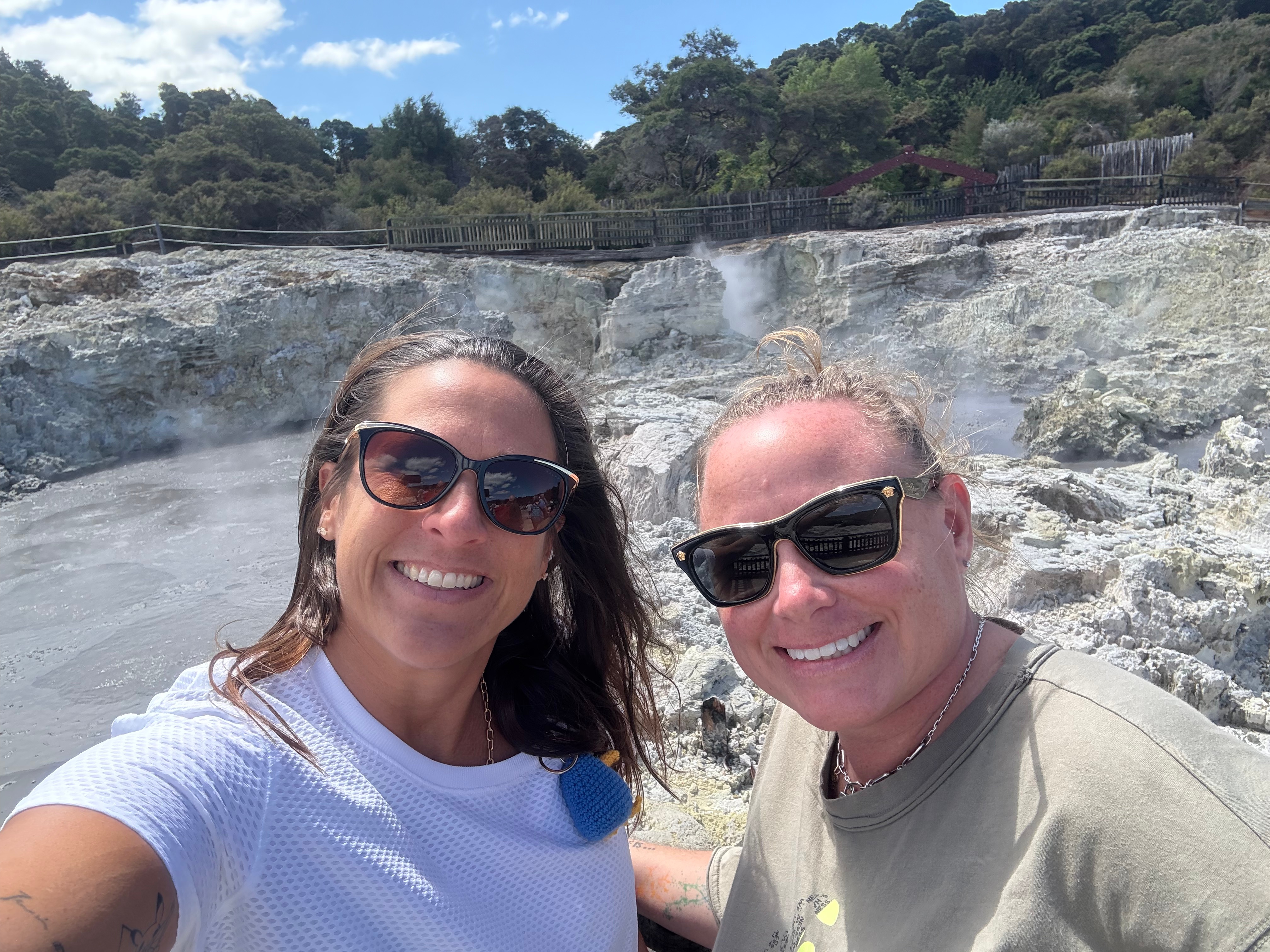
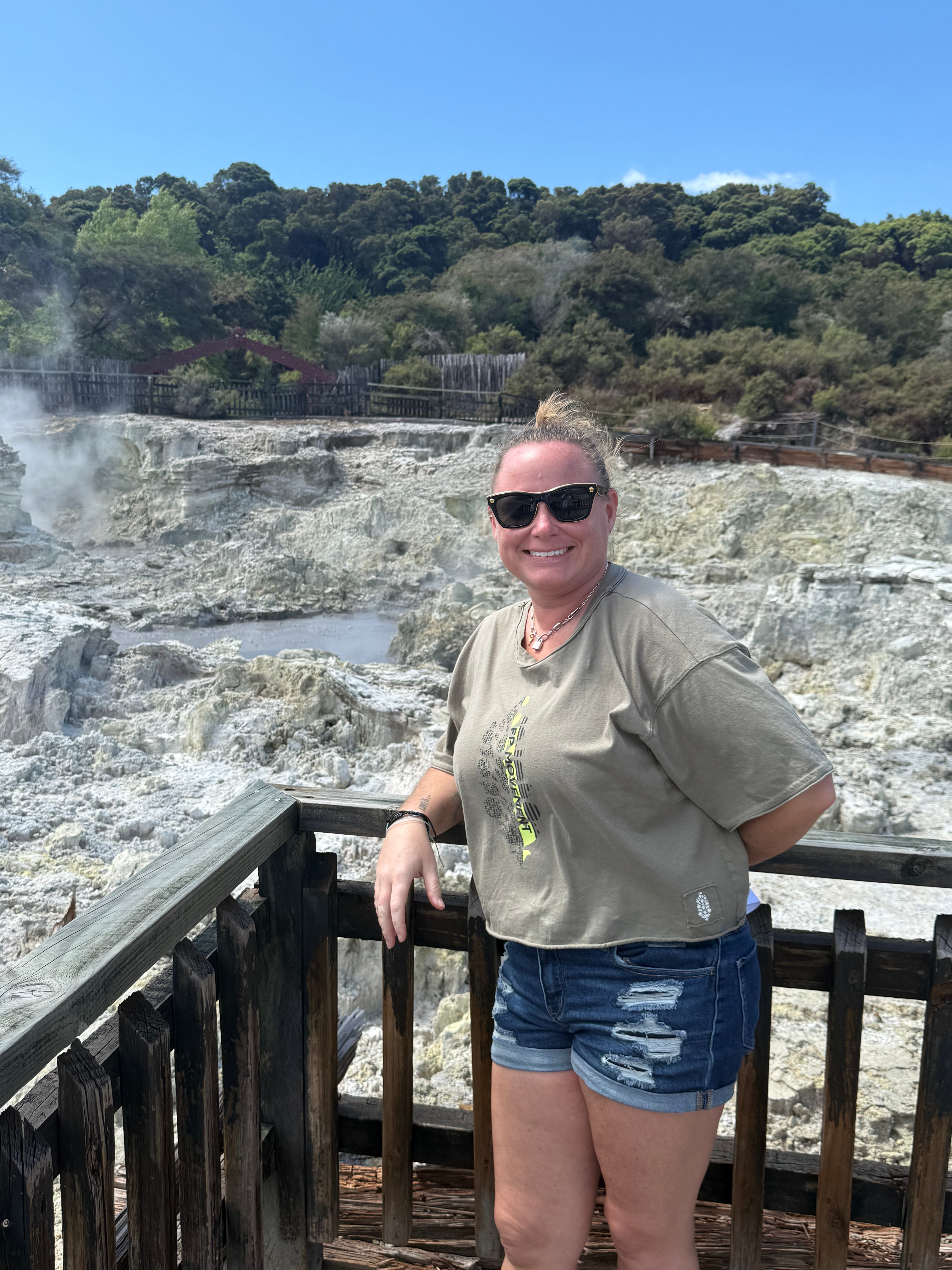
Hell’s Gate (Tikitere) is one of those places that earns its name. Think of the moment in The Lion King when Mufasa tells Simba never to visit the dark, shadowy place — it has that same energy. This stretch of land is the opposite of the lush, saturated green that defines the rest of New Zealand. Here, the ground is dead and cracked, steam rises from every direction, mud boils in thick gray bubbles, and the entire landscape feels stripped of color and life.
Since the city sits on a dormant (not dead) volcano, the ground is literally alive with geothermal activity. Pools of acidic water reach over 200°F, steam hisses from beneath your feet, and the sulfur in the air is so strong that breathing feels optional. I am not qualified to explain the science behind any of this, but walking through Hell’s Gate feels like witnessing the earth in the aftermath of something ancient and violent, still simmering.
It’s a powerful reminder that the world is older, stronger, and far more dynamic than anything we build on top of it.
Would I go again?
No. Once was enough.
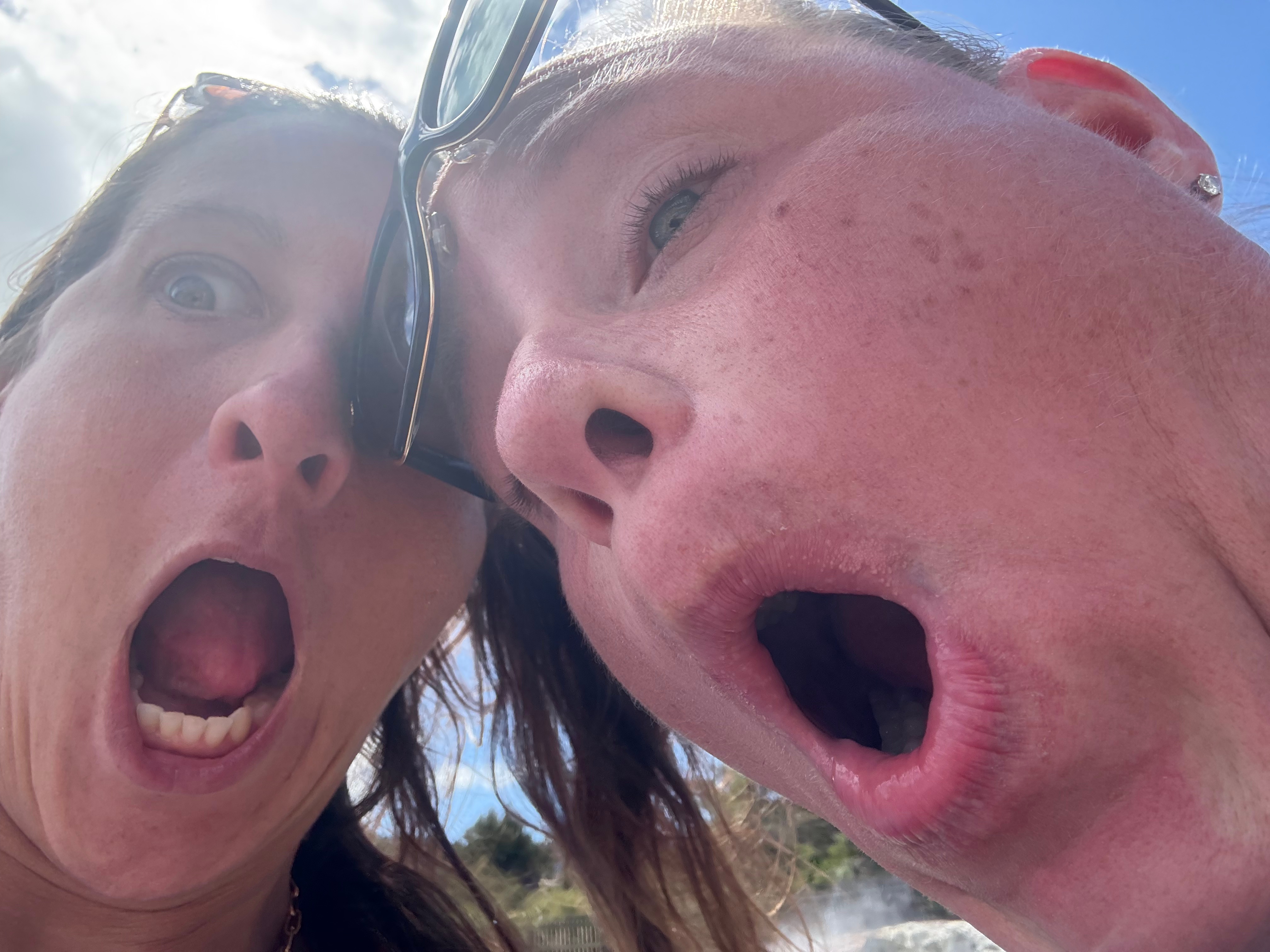
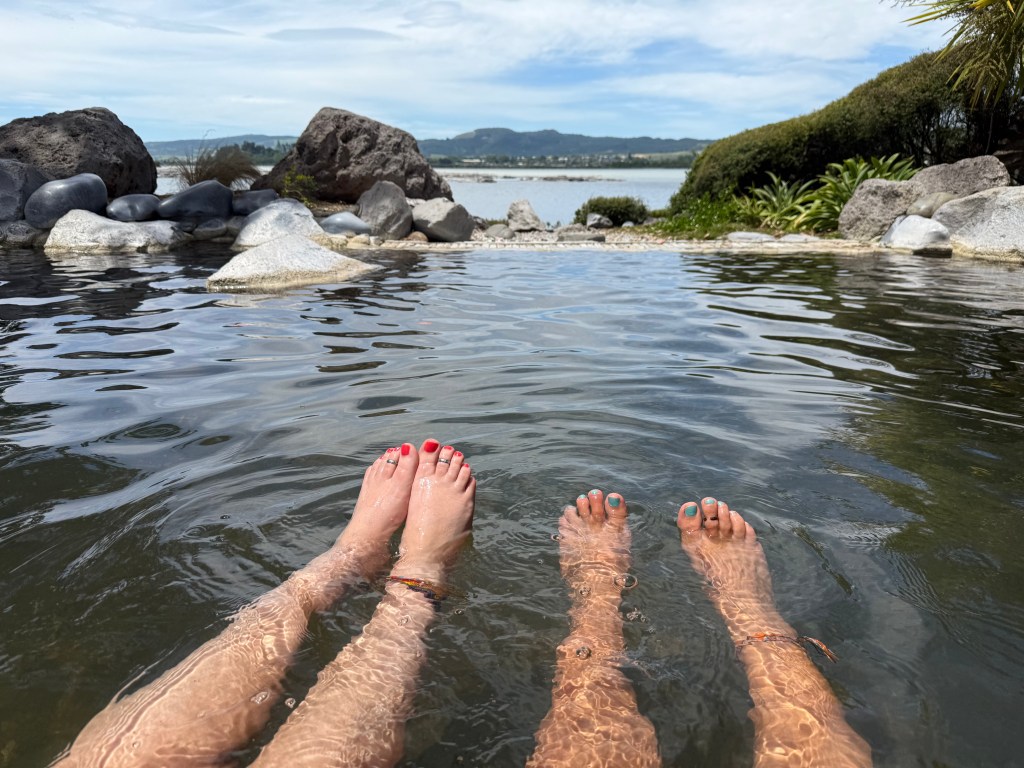
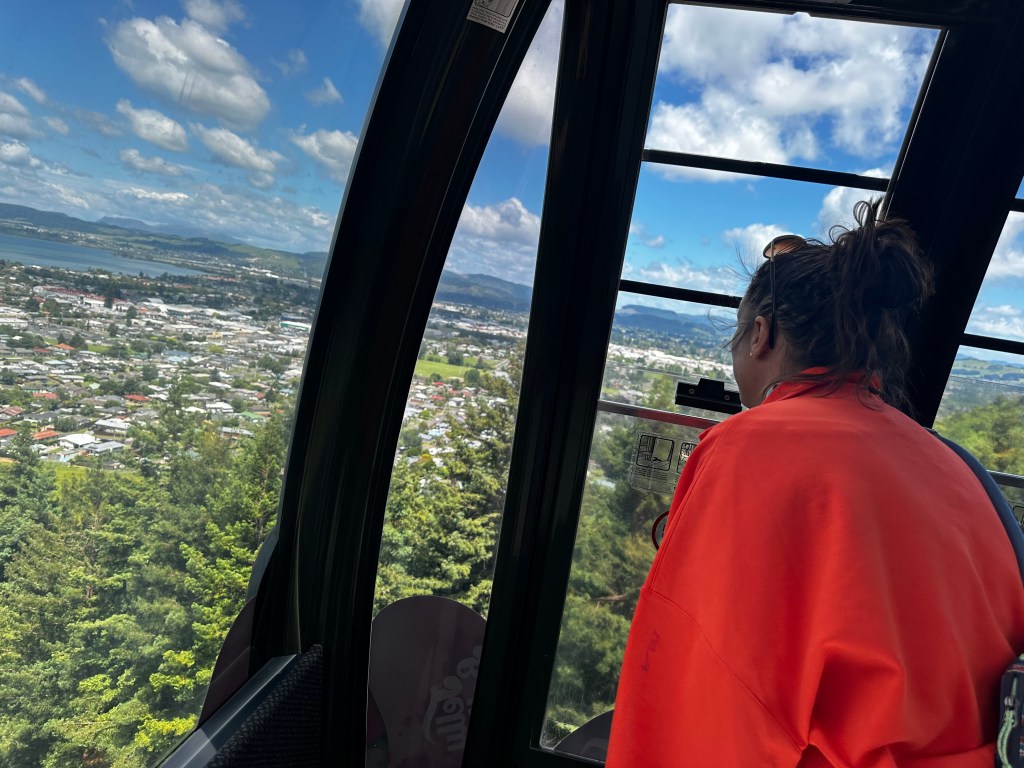
Between the swimmable hot springs (they smell), the Zorb Experience (I would highly recommend!), the Skyline, the Wine Tasting, the Ziplining, Skydiving, Horseback riding, Redwood Tree walk (highly recommend) there is no shortage of things to do in Rotorua. I imagine it would be a really cool place to take adventurous teenagers.
I had a striking realization in Rotorua that had nothing to do with sulfur or geothermal activity. We were at a winery, talking with a young woman, let’s call her Claire, who had just finished walking us through New Zealand wines. When the tasting wrapped up, she pulled up a chair and wanted to swap stories. It’s incredibly common for both Kiwis (native New Zealanders) and Australians to take a year off after high school to travel the world. It’s almost a rite of passage, a way to step into adulthood with a sense of independence and global awareness.
Claire had chosen to go to university first, so her gap year was still ahead of her. For nearly an hour we sat there listing places she wanted to explore: Egypt, Greece, Amsterdam, ect. We noticed she hadn’t mentioned the United States, so in true American fashion, we asked where she’d want to visit if she came our way.
We expected her to say New York, maybe Los Angeles or Miami. Instead, she made a scornful but apologetic face. She told us she would never want to go to America.
What followed was a deep, honest conversation about cultural differences and how the U.S. is perceived abroad. I shared my belief that many Americans hesitate to travel because of culture shock and fear: fear of unfamiliarity, fear of not fitting in, fear of danger. Claire was taken aback. From her perspective, the United States is one of the most dangerous places in the world to visit.
It was jarring, but eye-opening. The place many Americans see as the center of the world is, to others, the last stop on their travel wish list.
This made me do a little research. The Global Peace Index (GPI) is the world’s leading measure of global peacefulness, ranking 163 countries based on 23 indicators like conflict, safety, militarization, and societal resilience, published by the Institute for Economics & Peace (IEP). On this list, New Zealand is the 3rd safest country in the world to live and visit. Japan is number 8. The United Kingdom is number 30. The United States? We are number 128, right next to Kenya and Ecuador. The total number of countries represented on this list is 163.
Our brief but polite political discussion further lamented Claire’s fears. We appear to the outside world to be fragmented, aggressive, opinionated and global bullies. With our crime rate, our mass murder rate and our constant involvement directly and indirectly to wars that are not ours, the American Dream is something that is a dated and possibly a self descriptive ideal.
We did not drive back to Aukland. We dropped our rental car, headed to the tiny local airport, had a Kiwi beer, and are moving on to Fiji. New Zealand is everything you imagine it to be – the natural beauty is inconceivable and incomparable. The people are overtly friendly. The Maori culture is still alive and present with its food, customs, dialects, tattoos, and intricate wood carvings present in every aspect of the country. We did not have time do the South Island, that will have to be another adventure.
Interesting Random Thoughts:
- The diversity of people is unique. There is a large Asian population, a large Maori population and then European settlers. We also met French, Dutch and various other cultures.
- The cost is comparable to the US. The local currency is about 0.6 NZD per USD.
- The ozone layer is very very thin in the summer months. This makes the UV index very high. Claire told us skin cancer is a very real concern for most Kiwis. They are encouraged to wear SPF 50 or higher sunscreen daily due to this.
- The local wine is fantastic; the beer is meh.
- The architecture is very cool – there are a lot of black / metal / beautifully designed homes.
Gas Stations, Toilets and Pigeons:
I know this sounds like an odd section to write about. But after all of my travels, I truly believe you learn a lot about a country by their gas stations (looking at you Uncle Jim), toilets and pigeons.
- Gas stations: pretty similar to ours. Self pump, self pay – but the kiosk is in the middle of the station, not at individual pumps. Self explanatory and not confusing. 5/5 stars.
- Toilets: Tall, like most European toilets with the tiny button on the back. Pretty standard, not unique. 3/5 stars.
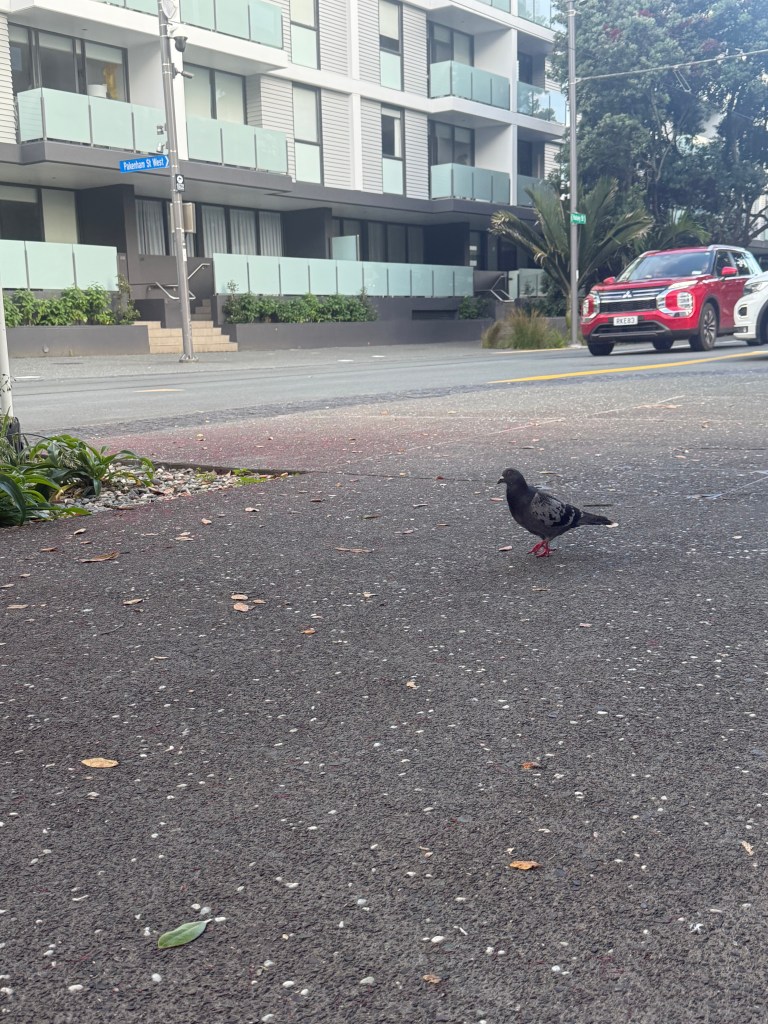
- Pigeons: healthy, well fed, nicely feathered with all of their toes. 5/5 Stars.
Food:
Meats, Breads, Fish, Meat Pies, Wine – standard and easy to transition to. 3-4/5 stars.

Next: Fiji

 Be a Traveler Not a Tourist
Leave a reply to Sydney, Australia 2025 – Be a Traveler Not a Tourist Cancel reply